

—
Last updated: June 2026 | Affiliate disclosure: TwirlWeddings earns a commission on purchases made through links on this page, at no extra cost to you.
If you’ve been searching “Blue Nile vs James Allen,” there’s a good chance you already have one tab open for each retailer and you’re trying to figure out which one to trust with a $3,000 to $15,000 purchase. That’s a completely reasonable place to be — until March 2026, it was a straight comparison between two of the best online diamond stores in the world.
But there’s something important you need to know before you go any further: James Allen no longer exists as a standalone website.
In March 2026, parent company Signet Jewelers announced it would shut down JamesAllen.com and fold the brand into Blue Nile as a proprietary collection. The transition is expected to complete by early August 2026. So the comparison you’re researching has shifted — this is no longer a head-to-head between two competing sites. It’s a question of how to navigate the new Blue Nile, what happened to everything James Allen was great at, and which retailers are now your best alternatives.
This guide answers all of that clearly, so you can move forward confidently.
Quick Verdict
The short answer: Blue Nile is now the primary destination for Signet’s online diamond business, and it has absorbed James Allen’s technology and signature ring styles. For most buyers in 2026, Blue Nile is still an excellent choice — particularly if you’re buying a natural diamond or want a trusted, well-established retailer. For lab diamond shoppers who want the deepest inventory and most competitive pricing, it’s worth cross-shopping with Whiteflash and Blue Nile side by side.
| Category | Verdict |
|---|---|
| Overall Best Retailer 2026 | Blue Nile |
| Best for Natural Diamonds | Blue Nile |
| Best for Lab Diamonds | Blue Nile or Whiteflash |
| Best Diamond Viewing Tools | Blue Nile (now includes JA tech) |
| Best for Premium Cut Quality | Whiteflash |
| Best for Ethical Sourcing | Brilliant Earth |
| Best for Price Shopping | Blue Nile + compare at Whiteflash |
The 2026 Story: What Happened to James Allen?
James Allen launched in 2006 and built a loyal following by doing something no one else was doing at the time: letting buyers see every diamond in 360° HD video before purchasing. For over a decade, that transparency edge made James Allen one of the most recommended engagement ring retailers on the internet.
Then the business numbers caught up with them.
After James Allen was acquired by Signet Jewelers for over $300 million in 2017, its revenue declined sharply in subsequent years — falling 33% in a single fiscal year to $142.5 million, and nearly 49% over two years. The brand was no longer profitable enough to justify its own infrastructure.
On March 19, 2026, Signet announced it would wind down JamesAllen.com. The James Allen brand will continue as a proprietary collection inside Blue Nile, featuring its signature modern ring styles. James Allen’s 360° viewing technology — arguably its most important contribution to the industry — will be distributed across Signet’s other platforms, including Blue Nile.
The official framing from Signet: Blue Nile is being positioned as an “elevated luxury” brand “anchored in the enduring value of natural diamonds.” The James Allen collection within Blue Nile will cater to trend-forward, modern buyers who loved James Allen’s aesthetic.
What this means in practice: You can still find the ring styles James Allen was known for. They’ll just live under Blue Nile’s roof going forward.
Blue Nile in 2026: What You’re Working With
Before comparing Blue Nile to alternatives, it’s worth understanding where the retailer actually stands today.

Blue Nile was founded in 1999 and is one of the few online diamond retailers with a genuine 25-year track record. It’s a publicly traded company (owned by Signet Jewelers) and has sold hundreds of thousands of engagement rings. That institutional stability matters when you’re handing over several thousand dollars.
Diamond Inventory
Blue Nile maintains one of the largest diamond inventories online. Their natural diamond selection runs well over 150,000 GIA-certified stones at any given time. On the lab-grown side, they carry 20,000+ IGI-certified lab diamonds, with prices starting around $300 for smaller stones.
The natural diamond inventory is where Blue Nile consistently shines. The breadth of GIA-certified stones across every shape, cut quality, and price point means you rarely hit a dead end in your search.

Viewing Technology
One of the big questions after the James Allen merger is what happens to the 360° HD diamond imaging. The short answer: Blue Nile already has 360° video on a significant portion of its inventory, and that coverage has been expanding. The technology James Allen pioneered is being redistributed across Signet’s platforms as part of the merger.
For natural diamonds, Blue Nile’s imaging quality lets you inspect a stone meaningfully before buying — which is the bare minimum standard for spending this kind of money online. For some smaller or lower-price-point stones, imaging may be limited. Always filter for stones with 360° video available when using their search tools.
Pricing
Blue Nile’s pricing sits in the competitive mid-range. They operate on thin margins by design — the whole Blue Nile business model from day one has been to undercut traditional jewelers by removing retail markup.
For a benchmark 1ct round G/VS2 natural diamond, Blue Nile typically prices in the $5,500–$6,500 range depending on cut quality and certification. Lab-grown equivalents run roughly $900–$1,300.
One useful feature: Blue Nile offers a price match guarantee. If you find the same diamond at James Allen (while it still operates) or another major retailer at a lower price, Blue Nile will match it.
Settings and Ring Selection
This is an area where Blue Nile has a meaningful advantage going into the merger. Blue Nile lists approximately 1,515 engagement ring settings — nearly double what James Allen’s 775 settings offered. Classic solitaires, hidden halos, pavé bands, three-stone rings, nature-inspired designs — the breadth is genuinely impressive.
The James Allen collection within Blue Nile is expected to bring the more modern, fashion-forward aesthetic: think bezel settings, toi et moi styles, east-west orientations, and contemporary geometric designs. If you loved James Allen’s ring style sensibility, those designs aren’t going away — they’re moving into a larger store.
Blue Nile Classic Collection vs James Allen Collection: What’s the Difference?
Once the transition completes, Blue Nile will house two distinct design directions under one roof.
Blue Nile’s Core Collection tends toward timeless elegance. Six-prong solitaires. Classic cathedral settings. Traditional halo rings. Platinum and yellow gold pieces that look exactly like what your grandmother would call “a proper engagement ring.” If your buyer profile is “I want something that will look exactly right in 40 years,” this is your lane.
The James Allen Collection at Blue Nile leans modern and trend-aware. Sleek minimal solitaires. Bezel settings for active lifestyles. Bold statement pieces. Hidden halos. The ring styles that get shared on Pinterest and Instagram. If your buyer profile is “I want something distinctive that feels current,” you’ll find it here.
The practical upside of the consolidation: you get both aesthetics in one place, on one platform, with one checkout and one return policy.
Diamond Quality and Certification
Both Blue Nile’s core inventory and the incoming James Allen collection use independent third-party grading. Here’s what to know:
GIA certification is the industry gold standard for natural diamonds. Blue Nile uses GIA exclusively for their natural diamond grading, which is exactly where you want to be for a significant purchase. A GIA grade means a third party — not the seller — has verified the diamond’s 4Cs.
IGI certification is the dominant standard for lab-grown diamonds. IGI grades are broadly accepted, and IGI has tightened its standards in recent years. For lab diamonds, IGI certification is perfectly appropriate and widely used by reputable retailers including Blue Nile.
One concern to watch: some retailers carry diamonds with weaker certification labs (EGL, GSI) that grade more generously than GIA, which means you end up paying GIA prices for a stone that doesn’t meet GIA standards. Blue Nile sticks to GIA for natural diamonds, which removes that risk. For more on this, see our guide to diamond certifications.
Lab-Grown Diamonds at Blue Nile in 2026
Lab-grown diamonds have changed the engagement ring market dramatically. What cost $5,000–$8,000 in natural diamond form now costs $900–$2,000 in lab-grown form with identical optical and physical properties. For buyers who care more about the look and feel of the ring than the origin of the stone, this is a compelling shift.
Blue Nile’s lab diamond inventory runs 20,000+ stones, all IGI-certified, covering every major shape. Prices for a 1ct round G/VS2 lab diamond run approximately $900–$1,300.
That said, lab-grown diamond pricing has been falling significantly. Oversupply in the market has driven lab diamond prices down considerably since 2023, and that trend accelerated in early 2026. This is good news for buyers — the question is whether you’re getting accurate current pricing. Always cross-check what Blue Nile shows against at least one other major retailer before finalizing.
Whiteflash is worth checking specifically if you’re buying a lab-grown diamond and care about cut quality above all else. Whiteflash’s A-CUT-ABOVE® lab-grown diamonds are precision-cut to ideal proportions, and for buyers who want maximum light performance from their stone, that quality tier is meaningful. Blue Nile’s pricing may be lower on comparable specs, but Whiteflash’s top-tier cut quality closes the gap on visual performance.
For a detailed comparison on the lab vs natural decision itself, see our lab-created vs natural diamonds guide.
Blue Nile Pricing: A Practical Guide
Here’s a realistic pricing reference for 2026, based on current market conditions. Note that prices fluctuate frequently — always verify current figures directly on the retailer’s site.
Natural Diamonds (Blue Nile, G/VS2, Excellent Cut)
| Carat Weight | Natural Diamond Range | Lab Diamond Range |
|---|---|---|
| 0.50 ct | $1,200 – $1,800 | $250 – $450 |
| 0.75 ct | $2,200 – $3,200 | $400 – $700 |
| 1.00 ct | $5,500 – $7,500 | $900 – $1,300 |
| 1.50 ct | $10,000 – $16,000 | $1,500 – $2,500 |
| 2.00 ct | $18,000 – $28,000 | $2,500 – $4,500 |
Prices verified June 2026. Natural diamond prices remain under pressure from lab competition and oversupply of rough.
A smarter use of your budget: Consider going 0.05–0.10ct below the major carat marks (1.00ct, 1.50ct, 2.00ct). A 0.96ct diamond looks virtually identical to a 1.00ct diamond to the naked eye, but often prices 10–15% lower. This is one of the most effective ways to extend your budget without sacrificing visual impact. For more detail on carat pricing, see our 1 carat diamond buying guide.
Blue Nile’s Policies: What to Know Before You Buy
Return Policy
Blue Nile offers a 30-day return window from the shipment date. Returns are accepted in original, unworn condition, with all paperwork included (critically: if you lose the diamond grading report, you’ll be charged $150 to replace it — keep your documentation safe).
Blue Nile provides free return shipping for up to two returns per customer per year. Returns processed within the 30-day window have no restocking fee. Engraved rings may incur a $25 repolishing fee.
Items that cannot be returned include special orders (which are final sale), engraved jewelry other than rings, and diamonds purchased through the Diamond Upgrade Program (though those can be exchanged within 30 days).

Free Resizing
Blue Nile offers one free ring resize within one year of purchase, up or down two sizes, for rings where the design permits resizing. This excludes eternity bands, tension rings, rings made of alternative metals (tungsten, stainless steel, tantalum), and certain other designs that structurally can’t be resized.
If you’re unsure whether your chosen ring can be resized, ask before you buy — not after.
Lifetime Warranty
Blue Nile’s limited lifetime warranty covers manufacturing defects. It does not cover damage from normal wear and tear, trauma, theft, or loss. It also does not cover resizing. Complimentary cleaning and maintenance are available, though shipping costs are the customer’s responsibility.
Shipping
All Blue Nile shipments go via FedEx or UPS and require a signature upon delivery. Discreet packaging is used, which is worth noting if the ring is a surprise. The carrier will attempt delivery up to three times before returning the package — plan your delivery day accordingly.
Customer Experience and Reviews
Blue Nile’s 25 years in business comes with a substantial review record. The consistent praise across reviews centers on inventory breadth, pricing transparency, and the shopping experience itself. The website is genuinely well-designed — the search filters are granular enough that you can narrow 150,000+ diamonds down to a realistic shortlist efficiently.
The consistent criticism: customer service response times can be slow for complex orders, and some customers have experienced shipping delays on custom pieces. These aren’t unique to Blue Nile — they’re industry-wide pain points for online jewelry — but they’re worth knowing.

For high-ticket purchases, Blue Nile does offer phone and chat support. Their consultants can help you evaluate specific diamonds and compare stones, which is valuable when you’re making a decision in the $5,000+ range.
Blue Nile vs Whiteflash: Where They Differ
With James Allen gone as a standalone alternative, the most meaningful comparison for most buyers is now Blue Nile vs Whiteflash.
Whiteflash is a Houston-based retailer that has built its reputation almost entirely around cut quality. Their A-CUT-ABOVE® diamonds are independently verified ideal cut stones — the kind of cut quality where light return and sparkle are genuinely measurable and demonstrably better than a generic “Excellent” or “Very Good” cut grade.
| Category | Blue Nile | Whiteflash |
|---|---|---|
| Inventory Size | 150,000+ natural, 20,000+ lab | Smaller, curated inventory |
| Cut Quality Focus | Excellent/Very Good | Super-ideal (A-CUT-ABOVE®) |
| Natural Diamond Pricing | Competitive | Premium for top-tier cuts |
| Lab Diamond Pricing | Competitive | Premium for ideal-cut lab stones |
| Diamond Imaging | 360° video on most stones | ASET, Hearts & Arrows, 360° video |
| Best For | Broad selection, value, ease | Buyers who prioritize light performance |
| Return Policy | 30 days | 30 days |
The recommendation for most readers: Blue Nile is the right starting point. Browse their inventory, find stones you like at your budget, then compare the same specs at Whiteflash to see if their cut-quality premium makes sense for your priorities. For buyers who genuinely want the best-performing diamond — not just a well-graded one — Whiteflash’s A-CUT-ABOVE® tier is worth the extra spend.
For a deeper look at Whiteflash’s offering, see our Whiteflash review.
Blue Nile vs Brilliant Earth
Brilliant Earth is the go-to retailer for buyers whose primary concern is ethical sourcing. They offer natural diamonds with detailed chain-of-custody documentation, lab-grown diamonds, recycled metals, and a strong sustainability focus that Blue Nile doesn’t match.
The tradeoffs: Brilliant Earth’s prices typically run 15–20% higher than Blue Nile for equivalent stones. Their inventory is smaller. And their definition of “conflict-free” and “beyond conflict-free” has been criticized for being vaguer than it sounds.
Choose Brilliant Earth if the origin of your diamond and the ethics of your purchase are genuinely important to you, and you’re willing to pay a premium for documented sourcing. Choose Blue Nile if you want maximum selection and competitive pricing, and you’re comfortable with Kimberley Process compliance as your ethical baseline.
For more on this comparison, see our Brilliant Earth vs Blue Nile review.
Blue Nile vs Rare Carat
Rare Carat is fundamentally different from Blue Nile — it’s a diamond comparison marketplace, not a retailer. Think of it like Kayak for diamonds: you search Rare Carat’s platform, it pulls results from multiple retailers (including Blue Nile and others), and you’re directed to buy from the underlying retailer.
Rare Carat’s value is in price comparison — it helps you see whether Blue Nile’s price on a specific stone is competitive relative to the broader market. Their AI-powered grading analysis can also flag potentially overpriced stones.
The limitation: when you buy through Rare Carat, your actual transaction is with a third-party retailer, not Rare Carat itself. Customer service, returns, and warranties are all governed by that retailer’s policies, which vary. Blue Nile, as a direct retailer, gives you a more predictable and well-established post-purchase experience.
The smart approach: use Rare Carat to benchmark pricing, then buy directly from Blue Nile or Whiteflash where you have established policies and customer support.
Diamond Shapes at Blue Nile: What to Know
Blue Nile carries all major diamond shapes, and each has its own pricing dynamics and quality considerations. A few things worth knowing as you search:
Round brilliant is the most popular shape and the most expensive per carat — typically 20–35% more than comparable fancy shapes. The standardized cutting parameters for rounds mean light performance is predictable and competition is fierce, which is why Blue Nile’s round inventory is deep and pricing is transparent. If you want the most sparkle and are happy paying the round premium, this is your shape.
Oval has become one of the most requested shapes in recent years and for good reason: it typically looks larger than a round of the same carat weight due to its elongated outline. Watch for the “bow-tie effect” — a dark shadow across the center of some ovals that results from poor cutting. The 360° video is essential for evaluating this in ovals. Not every oval has it, and it ranges from barely noticeable to distracting. For a full breakdown, see our oval cut diamond guide.
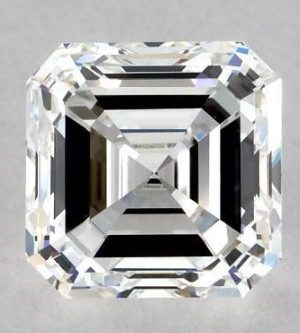
Emerald cut is a step-cut shape with long, parallel facets that create a hall-of-mirrors reflection rather than the sparkle of a brilliant cut. These shapes are unforgiving — inclusions and color show more clearly in step cuts than in brilliant cuts. If you’re buying an emerald cut on Blue Nile, go higher on clarity than you would for a round. VS1 or better is the usual recommendation for eye-clean results. See our emerald cut guide for specifics.
Cushion cut has significant variation in cutting style — some cushions have a crushed ice look with tiny, scattered reflections; others have a chunky, chunky sparkle pattern. Both are valid, but they look very different, and buyers often don’t realize they have a preference until they see them side by side. Blue Nile’s 360° video makes this comparison possible without visiting a store. See our cushion cut guide for a deeper breakdown.
Princess cut was one of the most popular shapes for years and remains a reliable choice. It tends to price 10–20% below round for equivalent quality. One practical note: the pointed corners are vulnerable to chipping — always choose a setting with prongs that protect all four corners. See our princess cut guide.

Pear, marquise, and heart shapes require careful evaluation of symmetry. Asymmetry in these shapes is distracting and hard to unsee once you notice it. For pear and marquise, also check for the bow-tie effect.
For any fancy shape, the rule is the same: trust the video, not just the grade. Two diamonds with identical GIA certificates can look completely different.
Common Buying Mistakes to Avoid
1. Focusing only on carat weight. Carat is weight, not size. Two 1ct diamonds can look dramatically different depending on their cut and shape. A well-cut 0.90ct often looks larger and more brilliant than a poorly cut 1.00ct. See our diamond cut guide for more.
2. Trusting a grade without seeing the stone. A VS1 clarity grade is a grade range, not a guarantee. Two VS1 diamonds can look completely different based on inclusion placement and type. Always view the 360° video before buying, and focus on whether the diamond looks clean to the naked eye — not just what the certificate says. Our eye-clean diamond guide explains this well.
3. Overbying on color. For most ring settings, the color difference between a G and an H diamond is invisible to the naked eye, but the price difference is meaningful. D, E, F color grades command a significant premium — one that most buyers can’t justify unless they’re buying a large stone in a platinum solitaire setting where color shows most. See our diamond color guide for practical guidance.
4. Ignoring setting compatibility. Your choice of metal and setting style affects how your diamond looks more than most people realize. Yellow gold masks slight color in the diamond (a J stone can look white in yellow gold). White gold and platinum show color more clearly. If you want to go lower on color grade, yellow gold is your friend.
5. Not understanding the return window. Blue Nile’s 30-day return window starts from the shipment date, not when you receive the package. If you’re planning a surprise proposal, factor in your timeline carefully. Resized rings may have different return conditions — read the fine print before you assume you can return a ring you’ve had resized.
Choosing the Right Engagement Ring Setting
One area buyers often underestimate is how much the ring setting itself costs — and how much it affects the overall look. At Blue Nile, settings for solitaire rings start around $400–$600 in 14K gold, while more elaborate pavé, halo, or three-stone designs can run $1,200–$2,500+ depending on metal and design complexity.
Some setting considerations specific to Blue Nile:
Solitaire settings — Blue Nile’s classic four and six-prong solitaires are straightforward and well-priced. They’re the workhorses of the engagement ring world for a reason: they keep the focus on the diamond, they’re easy to resize, and they pair with almost any wedding band.
Halo settings — Halos make a center stone look significantly larger, which is a legitimate budget strategy. A 0.75ct center stone in a halo can look as visually impressive as a 1.00ct solitaire, at a lower total price. For more on this, see our halo setting guide.
Bezel settings — A bezel encircles the diamond in metal, protecting the stone’s edges. This is an excellent choice for active buyers (nurses, teachers, athletes, anyone who works with their hands). Blue Nile carries a solid range of bezel designs, and the James Allen collection within Blue Nile will bring more modern bezel options. See our bezel setting guide.
Pavé settings — Pavé bands with small accent diamonds add sparkle to the setting itself. They’re beautiful, but harder to resize and more complex to repair than simple solitaires. If you’re buying pavé, confirm whether your chosen ring is resizable before purchase. More in our pavé setting guide.
Metal Choice: Platinum vs White Gold vs Yellow Gold
The setting metal matters more than most buyers realize — both for appearance and long-term maintenance.
Platinum is the most durable option. It’s denser than gold and develops a patina over time rather than wearing away. The tradeoff: it’s also the most expensive, adding $300–$800+ to most ring settings versus comparable 14K gold. For buyers who want minimal maintenance and maximum durability, platinum is worth the premium. For the full breakdown, see our platinum vs white gold guide.
14K white gold is the most popular choice for engagement rings in the US. It balances durability, appearance, and cost effectively. The slightly yellow-green tint of white gold is masked by rhodium plating, which gives it the bright white look. That plating will wear off over time (typically 1–2 years with regular wear) and needs to be re-applied — usually a $50–$100 service at a jeweler. It’s a manageable maintenance cost, but worth knowing about.
Yellow gold has made a strong comeback. Beyond aesthetic preference, yellow gold is a budget-friendly choice that also masks color in diamonds. If you’re buying a G–J color diamond, yellow gold will make slight color in the stone nearly invisible. A 14K yellow gold solitaire with a slightly lower color grade is a legitimate money-saving strategy.
Rose gold is popular for its warm, romantic look. It’s typically 14K and wears similarly to yellow gold. Note that rose gold cannot be rhodium-plated to white, so what you see is what you get for the long term. See our rose gold vs yellow gold comparison.

Who Should Buy From Blue Nile?
Blue Nile is the right choice if:
- You want a large, well-organized inventory of GIA-certified natural diamonds
- You’re purchasing a traditional or classically styled engagement ring
- You want the assurance of a 25-year track record and established customer service
- You’re comfortable with a 30-day return window and want no-fuss policies
- You’re budget-conscious and want competitive natural diamond pricing
- You want access to James Allen’s signature modern ring styles in one place
Consider Whiteflash instead if:
- You’re buying a round brilliant or princess cut and want the best possible light performance
- Cut quality is your highest priority and you’re willing to pay a premium for it
- You want ASET and Hearts & Arrows imaging to verify ideal-cut status before buying
Consider Brilliant Earth instead if:
- The ethical origin of your diamond matters more than price
- You want detailed sourcing documentation beyond standard Kimberley Process compliance
- You’re open to a smaller selection at a higher price point in exchange for stronger ethics claims
Final Verdict: How to Buy an Engagement Ring in 2026
The closing of JamesAllen.com is the most significant change in online diamond retail in years. It means the head-to-head comparison many buyers researched for years is no longer relevant — but it doesn’t mean your options have narrowed.
For most buyers, Blue Nile remains the right starting point. The inventory is massive, the pricing is competitive, the policies are clear, and the 25-year track record means the infrastructure for supporting a high-ticket purchase is genuinely there. The addition of James Allen’s ring styles and technology makes the platform stronger, not weaker.
Cross-shop with Whiteflash before you finalize. Even if you end up buying from Blue Nile, comparing specific stones side by side with Whiteflash — especially if you’re buying a round brilliant diamond — will either confirm you’re getting value or show you a better option. It takes 20 minutes and could save you money or improve your diamond quality.
Use pricing benchmarks. Lab-grown diamond prices dropped significantly in 2025 and early 2026. Natural diamond prices are also under pressure. If a retailer quotes you a price that feels high relative to what you’re reading in guides like this one, don’t assume the market hasn’t moved — it has. Always verify current pricing on the retailer site, and don’t be shy about invoking Blue Nile’s price match guarantee if you find a better deal elsewhere.
The engagement ring market in 2026 rewards buyers who do their research. This guide is the starting point — your next step is to browse Blue Nile’s actual inventory with the knowledge of what to look for.
Buyer Type Recommendations
| Buyer Type | Best Choice |
|---|---|
| Classic/Traditional Ring | Blue Nile Core Collection |
| Modern/Fashion-Forward Ring | James Allen Collection at Blue Nile |
| Best Cut Quality | Whiteflash A-CUT-ABOVE® |
| Lab Diamond Buyer | Blue Nile or Whiteflash |
| Ethical Sourcing Priority | Brilliant Earth |
| Price-Sensitive Natural Diamond | Blue Nile |
| First-Time Online Diamond Buyer | Blue Nile |

Frequently Asked Questions
Is Blue Nile or James Allen better?
As of mid-2026, JamesAllen.com is being shut down and the brand is transitioning to a proprietary collection within Blue Nile. For buyers researching this comparison now, Blue Nile is the active retailer. The James Allen ring styles and technology are being folded into Blue Nile’s platform.
Are James Allen and Blue Nile the same company?
They’re both owned by Signet Jewelers, which is also the parent company of Kay Jewelers, Zales, and Jared. As of 2026, James Allen is being merged into Blue Nile as an exclusive collection rather than operating as a separate website. So functionally, yes — they are becoming the same platform.
Which has better diamond quality?
Blue Nile uses GIA certification for natural diamonds, which is the industry’s gold standard. Both Blue Nile and James Allen (before the merger) certified lab-grown diamonds through IGI. For the highest cut quality available online, Whiteflash’s A-CUT-ABOVE® program sets the benchmark above what either Blue Nile or James Allen historically offered at a standard level.
Does Blue Nile have good lab-grown diamonds?
Yes. Blue Nile carries 20,000+ IGI-certified lab-grown diamonds at competitive pricing. Lab prices have fallen significantly in 2025–2026, making this a genuinely good time to buy. The sweet spot for most buyers is a 1–1.5ct round or oval lab-grown in the G-H color, VS1-VS2 clarity range — you get an eye-clean stone with strong light performance at a fraction of the natural diamond price.
What is Blue Nile’s return policy?
Blue Nile offers 30 days from the shipment date for returns in original, unworn condition. Free return shipping is included for up to two returns per customer per year. There are no restocking fees, though engraved rings may incur a $25 repolishing fee. Special-order items are final sale.
Is Blue Nile cheaper than James Allen?
Historically, pricing between the two was very close — within 3–5% on average. Blue Nile was often slightly cheaper on lab-grown diamonds; James Allen slightly cheaper on some natural diamonds in the 1–2ct range. Since James Allen is being absorbed into Blue Nile, direct price comparison is no longer possible. Blue Nile’s price match guarantee is your best tool for ensuring competitive pricing.
Does Blue Nile offer financing?
Yes. Blue Nile offers financing with promotional 0% APR periods. Terms vary and promotional periods require minimum monthly payments — read the full terms before applying, as deferred interest can apply if the balance isn’t paid in full within the promotional window.
Can I still shop the James Allen collection?
During the transition period (through approximately August 2026), JamesAllen.com may still be operating in some form. After that, the James Allen ring styles will be available as a collection within Blue Nile. For the most current information, check Blue Nile’s website directly.
Related Guides
- Blue Nile Full Review
- Whiteflash Review
- Brilliant Earth Review
- Best Online Diamond Stores 2026
- Lab-Created vs Natural Diamonds
- Diamond Cut Guide
- Diamond Clarity Explained
- Diamond Color Guide
- Engagement Ring Setting Types
- Where to Buy Lab-Grown Diamonds
—