
Affiliate disclosure: This article contains affiliate links. If you purchase through our links, we may earn a small commission at no extra cost to you. Our recommendations are always based on honest research and gemological expertise.
Want the rich, saturated green of an emerald—without the eye-watering price tag or the fragility that comes with it? Green garnet might be the smartest gemstone decision you haven’t considered yet.
This isn’t a trendy alternative. Green garnet—particularly Tsavorite—is a genuinely rare natural gemstone with exceptional optical properties, a long fine jewelry heritage, and a price point that makes comparable emeralds look absurd. It’s the insider’s stone: collected by gemologists, loved by those who know, and still underpriced relative to what you’re actually getting.
This guide covers everything you need to make a confident buying decision. Price per carat, ring styles, durability, how it stacks up against emerald, where to buy without overpaying, and what to avoid. By the end, you’ll know whether green garnet is right for you—and exactly what to look for when you buy.
What Is Green Garnet? (And Why It’s More Valuable Than Most People Realize)
Most people think of garnet as a single red stone. That’s one of the most widespread misconceptions in the gemstone world. Garnet is actually a family of minerals spanning nearly every color of the spectrum—and the green varieties are among the most prized.
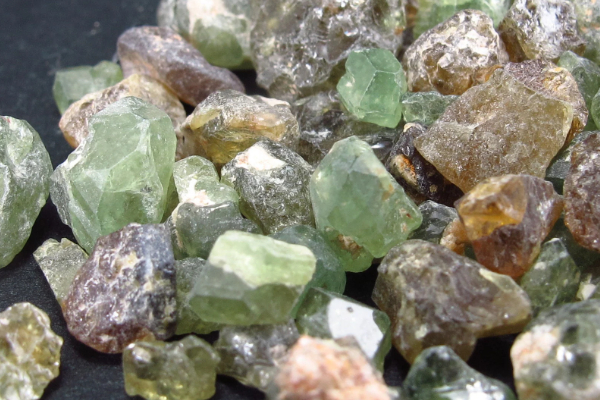
Two green garnets dominate the fine jewelry market:
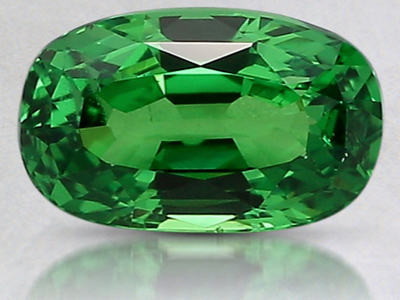
Tsavorite garnet is the more accessible and most popular choice. Discovered in the late 1960s in the Tsavo region of Kenya (hence the name), it produces a vivid, saturated green that rivals the finest Colombian emeralds in color intensity. Tiffany & Co. was instrumental in bringing Tsavorite to market, and it’s been a recognized fine gemstone ever since.
Demantoid garnet is the rarer, more expensive option. Found primarily in Russia’s Ural Mountains and, more recently, Namibia, demantoid is famous for its extraordinary fire—its ability to disperse light into spectral colors exceeds that of diamond. A fine demantoid is a genuinely exceptional gemstone.
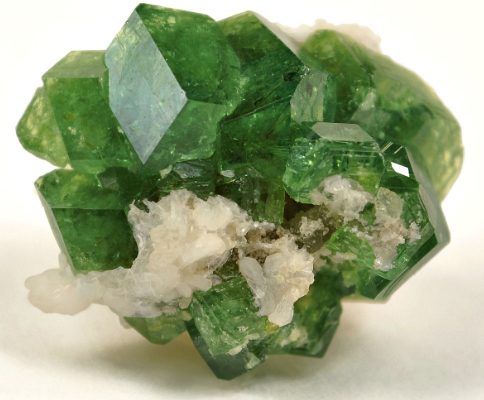
Both are natural, typically untreated, and optically superior to most emeralds at comparable price points. That combination of rarity, brilliance, and value is exactly what makes green garnet such a compelling choice for buyers who’ve done their homework.
It’s worth pausing on the rarity point, because it surprises most people. Fine-quality Tsavorite above 1 carat is genuinely scarce—arguably rarer than comparable emerald material. The deposits in East Africa are limited, mining is small-scale, and the stone hasn’t had the centuries of marketing that emerald has enjoyed. That’s partly why the pricing hasn’t caught up with what you’re actually getting. That gap won’t last forever, which makes now a reasonable time to buy if you’re drawn to this stone.
Green Garnet Meaning and Symbolism (Why It Matters for Engagement Rings)
For engagement ring shoppers, symbolism matters as much as aesthetics. Tsavorite garnet carries associations with vitality, prosperity, renewal, and compassion—making it a meaningful choice for couples who want their ring to represent growth and new beginnings rather than simply tradition.
The green color itself has ancient associations with nature, balance, and fertility across many cultures. Ancient Egyptians used green stones symbolically in their burial rituals, believing green represented life and rebirth. In more contemporary contexts, green gemstones are associated with the heart chakra in crystal healing traditions—relevant for buyers drawn to intentional jewelry.
If you’re drawn to a ring that tells a story beyond “I followed the traditional diamond path,” green garnet gives you that narrative without sacrificing beauty or quality. The modern buyer increasingly wants jewelry that means something specific—not just aesthetically beautiful, but symbolically coherent. For couples who value growth, intentionality, and a future built together, a Tsavorite garnet engagement ring has a story worth telling.
Types of Green Garnet: Which One Should You Choose?
Not all green garnets are created equal. Understanding the varieties helps you spend your budget where it counts.
Tsavorite Garnet — The Best Overall Choice for Most Buyers
Tsavorite is the recommendation for most buyers, full stop. It produces the vivid, saturated green that most people picture when they think of a beautiful green stone, it’s available in a practical range of sizes for engagement rings, and the price-to-quality ratio is genuinely exceptional.
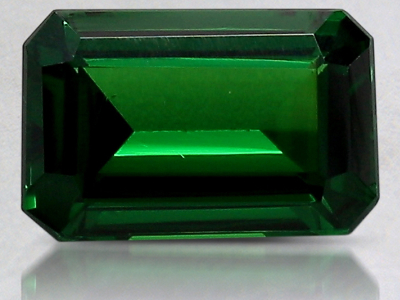
The finest Tsavorites come from Kenya and Tanzania and display a pure, rich green with strong saturation. Lower-quality stones trend toward yellow-green or mid-tones that lack the depth that makes this stone special. Color is everything with Tsavorite—more on this in the buying section below.
For buyers with a budget between $1,500 and $8,000 for the center stone, Tsavorite gives you the most visual impact per dollar of any green gemstone on the market.
Demantoid Garnet — The Rare, High-End Option
Demantoid is in a different category entirely. It’s one of the rarest garnets in the world, and its light performance—its fire specifically—is extraordinary. The term “horsetail inclusions” refers to a specific type of inclusion (asbestos fiber formations) found in Russian demantoids that’s actually considered a quality marker and proof of origin.
Demantoid is a collector’s stone. Fine specimens regularly trade above emeralds of equivalent size and color. If you’re shopping in the $5,000–$20,000+ range for a center stone and you want something genuinely unusual, demantoid deserves serious attention. For everyone else, Tsavorite is the practical path.
Other Green Garnets
Green grossularite and uvarovite garnets exist in the market but are less common in fine jewelry. Uvarovite, in particular, almost never appears as faceted stones due to its extremely small crystal formation—it’s typically used in druzy form. For engagement rings, stick with Tsavorite or demantoid.
Green Garnet Price Guide: What Should You Expect to Pay?
Green garnet pricing varies considerably depending on variety, color quality, clarity, and size. Here’s a realistic breakdown.
Tsavorite Price Per Carat
| Quality Grade | Price Per Carat |
|---|---|
| Commercial (pale or yellowish) | $50–$200/ct |
| Good (medium-toned, clean) | $200–$800/ct |
| Fine (vivid green, eye-clean) | $800–$2,000/ct |
| Exceptional (top color, 1ct+) | $2,000–$5,000+/ct |
The price curve for Tsavorite gets steep above 1 carat. Fine-quality stones under 1ct are widely available; well-saturated stones above 2 carats become genuinely scarce and price accordingly.
Demantoid Price Per Carat
| Quality Grade | Price Per Carat |
|---|---|
| Good Russian (with horsetail) | $1,500–$5,000/ct |
| Fine (vivid green, top clarity) | $5,000–$10,000/ct |
| Exceptional (2ct+, finest color) | $10,000–$20,000+/ct |
Namibian demantoid is available at somewhat lower prices but lacks the horsetail inclusions of Russian material and is generally considered less prestigious by collectors.
What Drives the Price of Green Garnet?
Color is the single most important factor. A vivid, pure green Tsavorite commands a dramatic premium over a pale or yellowish stone of identical size and clarity. Don’t sacrifice color saturation to get a bigger stone—the result almost always looks cheaper, not more impressive.
Size matters disproportionately above 1 carat. Supply of fine Tsavorites drops sharply above 1ct. The price per carat isn’t linear—a 1.5ct fine Tsavorite costs substantially more per carat than a 0.75ct stone of identical quality.
Origin affects Tsavorite value. Kenyan and Tanzanian material is most prized. Stones with documented origin from these sources command modest premiums.
The value proposition compared to emerald: A fine 1ct Tsavorite with vivid green color, eye-clean clarity, and no treatments might cost $1,500–$3,000. A comparable emerald—meaning genuinely comparable color intensity and eye-clean appearance—would typically run $4,000–$12,000 or more, often with significant treatment disclosure. That’s the core of the green garnet argument.
Green Garnet vs Emerald: Which Should You Choose?
This is the comparison most buyers come here to make. Let’s be direct about it.
| Feature | Tsavorite Garnet | Emerald |
|---|---|---|
| Color potential | Vivid, saturated green | Vivid to medium green |
| Typical clarity | Usually eye-clean | Almost always included |
| Treatments | Rarely treated | Nearly universally treated (oiling/resin) |
| Brilliance/sparkle | High (brilliant cut performs well) | Moderate (step cut standard) |
| Durability | Good (Mohs 7–7.5) | Moderate (Mohs 7.5–8, but brittle) |
| Price for comparable quality | Significantly lower | Premium pricing |
| Brand recognition | Less mainstream | Widely recognized |
| Rarity | Genuinely rare | Good quality is rare; poor quality abundant |
What “Usually Treated” Actually Means for Emeralds
Nearly all emeralds on the market—including expensive ones—have been treated with oils or resins to improve their apparent clarity. This is accepted industry practice and disclosed on GIA certificates. The Cedar Wood Oil treatment is most traditional; fracture filling with resins like Opticon is more modern and more controversial. Either way, what you see when you look at an emerald in a store is not always what you’ll see in five years.
The treatment can degrade over time, particularly if the stone is exposed to harsh cleaning agents or ultrasonic cleaners. Resin-filled fractures can become visible as the filler breaks down, particularly in stones with significant fracturing. High heat—from steam cleaning or even intense sunlight over time—can accelerate this degradation.
This isn’t a reason to categorically avoid emerald. But it’s information you deserve before making a $4,000+ purchase. An emerald graded “minor” or “moderate” treatment by GIA is a significantly different thing than an untreated Tsavorite, and the price gap between them often doesn’t reflect that difference adequately.
Durability: A More Complete Picture
The hardness numbers (Tsavorite 7–7.5, Emerald 7.5–8) suggest emerald should be more durable. In practice, the opposite is often true. Emerald’s characteristic internal fracturing (called jardin—French for garden) creates structural weaknesses throughout the stone. An emerald that’s heavily included is also more prone to fracture from impact than a less-included stone.
Tsavorite typically grows in cleaner crystal formations with fewer internal fractures. The result is a stone that’s slightly softer by Mohs rating but often more practically resilient because it lacks those structural weak points. This is one of the less-discussed advantages of Tsavorite over emerald for engagement ring use.
The Honest Verdict
Choose green garnet if you want maximum visual impact per dollar, genuinely eye-clean material, untreated stones, and high light performance. For daily wear in an engagement ring, it’s the practical and visually superior choice in this comparison.
Choose emerald if brand recognition and the cultural history of emerald matter to you, if you’re buying as an investment in a well-documented heritage stone, or if you want a specific vintage aesthetic that step-cut emeralds uniquely provide. Just go in with eyes open about treatments, cost, and care requirements.
The concise way to frame it: green garnet is the smart buyer’s emerald. Similar color, better clarity, lower price, easier care.
Is Green Garnet Good for an Engagement Ring?
Yes—with the right setting and realistic expectations about care. Here’s the full picture.
Durability: What You Need to Know
Tsavorite and demantoid garnet sit at Mohs 7–7.5 on the hardness scale. For context, diamond is 10, sapphire is 9, and quartz (which is in everyday dust and dirt) is 7. This means daily wear will gradually dull a garnet’s surface over years without proper care—but the same is true of many popular gemstones.
The practical takeaway: green garnet is suitable for an engagement ring if you choose a protective setting, clean it regularly with gentle methods, and aren’t particularly rough on your hands at work. It’s not the right center stone for someone who does heavy manual labor and never removes their ring.
For engagement ring durability comparisons, sapphire and diamond remain the most hard-wearing natural options. But for someone with a desk job or a low-impact lifestyle, the durability difference is largely theoretical.
Best Settings for Green Garnet
Bezel setting — the gold or platinum surround completely encircles the stone, protecting the edges from impacts. This is the single most protective setting option and the top recommendation for active wearers. It does reduce the amount of light entering the stone, but modern bezel designs have evolved significantly.
Halo setting — surrounding the center stone with a ring of small diamonds adds both visual impact and some physical protection. A halo setting makes a smaller stone look dramatically larger and the overall ring more prominent.
Four or six prong solitaire — appropriate if the stone is set with well-positioned prongs that protect the girdle. Avoid thin or widely spaced prongs that leave the stone vulnerable. A solitaire setting lets the stone do the visual work, which is appropriate for a fine Tsavorite with exceptional color.
Settings to approach carefully: channel settings that hold small stones along the band are fine for accent stones, but avoid tension settings for garnet center stones—the lateral pressure on the girdle can cause fracture over time.
High-Converting Green Garnet Ring Styles Worth Considering
If you’re visualizing what a green garnet engagement ring actually looks like in real life, these are the styles that consistently work best with this stone.
Tsavorite in Yellow Gold
This is the classic pairing. Yellow gold enhances the warmth of green garnet’s color, creating a jewel-toned richness that looks simultaneously vintage and contemporary. Think of the great colored stone pieces from Cartier or Bulgari—yellow gold and vivid gemstones is a combination with serious heritage. An oval or cushion-cut Tsavorite in an 18k yellow gold four-prong solitaire is an objectively beautiful ring.
The Diana-Style Halo
An oval center stone surrounded by a single halo of round brilliant diamonds is one of the most proven engagement ring formats in the world. Princess Diana’s sapphire ring made this a cultural touchstone; the same format in Tsavorite produces something equally striking but far less expected. A 1–1.5ct oval Tsavorite in a diamond halo, set in white gold or platinum, reads as luxurious and intentional. This style also photographs exceptionally well, which matters for couples who plan to share their engagement on social media.
Bezel-Set Modern Ring (Best for Daily Wear)
A clean bezel setting in 14k or 18k gold—yellow, rose, or white—gives maximum protection and a thoroughly contemporary aesthetic. Bezel-set rings have a sculptural quality that suits buyers who prefer architectural, non-traditional jewelry. This is the strongest recommendation for active lifestyles. The stone is secure, the profile is low enough to be practical, and the overall look is modern and distinctive.
Toi et Moi and Two-Stone Styles
Pairing a Tsavorite with a diamond in a two-stone setting creates a striking color contrast that’s currently very much in fashion. The green-and-white combination is bold but not garish—particularly in an oval-and-oval or oval-and-pear pairing.
How to Choose a High-Quality Green Garnet Stone
The difference between a mediocre green garnet and a genuinely beautiful one comes down to understanding what to prioritize. Here’s the practical buyer’s checklist.
Color: The Most Important Factor
This is non-negotiable. A vivid, pure green Tsavorite with strong saturation is dramatically more beautiful than a larger stone with pale or yellowish color. Look for:
- Pure green with no significant yellow or blue modifier
- Strong-to-vivid saturation (not pale or washed out)
- Medium-dark tone (not so dark the stone loses brilliance, not so light the color appears weak)
- Consistency throughout the stone (no zoning or color patches)
If a stone’s color doesn’t stop you in your tracks when you see it, keep looking. The difference between a mediocre Tsavorite and a fine one is not subtle—it’s the difference between a stone that makes people ask “what is that?” and one that’s politely ignored.
The classic description of the finest Tsavorite is “chrome green”—the same adjective used for the best chrome tourmalines and fine emeralds. If you’re familiar with what an extraordinary Colombian emerald looks like at its best, that’s the color target for top Tsavorite. The difference is you don’t have to pay Colombian emerald prices, or accept the clarity compromises that come with Colombian origin.
Clarity: What’s Acceptable
Tsavorite typically occurs in much cleaner material than emerald. Eye-clean stones—meaning no inclusions visible to the naked eye under normal lighting conditions—are available and should be the target. Unlike diamond clarity grading, there’s no standardized system for colored stones, so examine stones directly or request high-resolution imagery.
Minor inclusions that are only visible under magnification have no meaningful impact on beauty or durability. Inclusions visible to the naked eye reduce the stone’s value and appearance—avoid them in fine specimens unless you’re accepting a significant price discount for lower quality.
One practical test: look at the stone face-up under normal room lighting, at arm’s length. If you see anything distracting, that’s relevant. If you have to look for inclusions under a loupe, they’re not meaningful for an engagement ring.
Cut: Maximizing What the Stone Gives You
A well-cut Tsavorite will have excellent light return, consistent color face-up, and minimal windowing (a washed-out appearance in the center caused by poor proportions). The specific cut style matters less than the execution—a well-cut cushion, oval, or round will outperform a poorly-cut version of any shape.
Request 360° video or multiple images if buying online. Garnet’s relatively high refractive index (1.74 for Tsavorite) means a well-cut stone performs beautifully—don’t accept a stone that looks dull or shows a significant dead zone in the center.
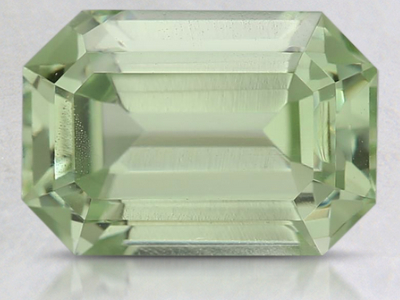
Oval cuts are currently the most popular shape for colored stone engagement rings and work exceptionally well with Tsavorite’s high brilliance. Cushion cuts produce a softer, more vintage-feeling light pattern. Round brilliants maximize sparkle. Step cuts (emerald cut, Asscher) show color more evenly and have a sophisticated, architectural quality. Any of these can be exceptional in the right stone.
Size: Think Visual Impact, Not Carat Weight
A 0.75ct Tsavorite with exceptional color and cut will look more impressive than a 1.25ct stone with average color. That’s not a compromise—it’s the smarter purchase. Buy the best quality you can afford in the size range that makes visual sense for your partner’s hand, rather than chasing weight at the expense of everything that actually matters.
For most engagement rings, a Tsavorite in the 0.75–1.5ct range offers the best combination of visual presence and practical value. Below 0.5ct, the stone can look too small as a solo center stone. Above 2ct, fine quality Tsavorite becomes genuinely scarce and prices rise steeply—at that level, the custom route and working with a specialist dealer makes more sense than browsing standard retail inventory.
Laboratory Reports: When Are They Worth It?
For Tsavorite stones above 1 carat and above $2,000, a GIA or AGL (American Gemological Laboratories) colored stone report is worthwhile. These reports confirm the identity of the stone, note any treatments detected, and provide an opinion on color quality using standardized language.
For smaller stones or lower price points, the cost of a laboratory report (typically $75–$150 for GIA colored stones) represents a meaningful percentage of the stone’s value and may not be practical. In these cases, buying from a reputable dealer with a clear return policy provides adequate protection.
Where to Buy Green Garnet Without Overpaying
Green garnet isn’t available at every jewelry store. You’re not going to find a meaningful Tsavorite selection at a mall chain. Here are the channels that consistently deliver.
Best Online Retailers
Blue Nile has expanded its colored stone inventory significantly in recent years. For buyers who want a full ring—rather than a loose stone—Blue Nile’s “build your own ring” feature allows you to select a setting and then find a compatible colored stone center. Their customer service is responsive and their return policy is solid. Best for buyers who want a complete, ready-to-ship ring from a trusted name with straightforward policies.
Whiteflash is better known for diamonds but has a curated colored stone selection that prioritizes quality over quantity. If you value editorial curation—fewer options, each hand-selected for quality—this is worth checking. Their gemological expertise is genuine, and they provide detailed documentation for the stones they carry.
Ritani offers a combination of online shopping and in-store preview appointments at partner jewelers. For buyers who want to see a stone in person before committing, this hybrid model is genuinely useful. Their colored stone selection has grown and the “try at home” preview feature reduces purchase anxiety for high-ticket items.
Angara (search directly) has one of the larger online Tsavorite inventories, with strong customization options and good photography. Their AOV for green garnet rings typically runs $400–$6,000+, making them a practical destination for buyers at various budget levels.
Leibish & Co. focuses on the premium and luxury tier—rare demantoid, fine large Tsavorites, and collector-grade material. If you’re shopping above $5,000 for the stone alone and want genuinely exceptional quality, Leibish deserves a look. Their inventory is curated at a level most retailers can’t match.
The Custom Route: Often the Best Option for Green Garnet
Here’s something worth knowing: green garnet is rarely stocked in meaningful quality at mass-market retailers. The stones that tend to appear there are either poor quality (pale color, mediocre cut) or generic designs that don’t do the stone justice.
For buyers who want fine Tsavorite, the custom route often produces better results at competitive prices:
- Purchase a certified loose Tsavorite from a reputable colored stone dealer (ask for a GIA or AGL colored stone report for stones above 1ct)
- Commission the setting from a custom jeweler or through a retailer like Ritani or Brilliant Earth’s custom design service
This approach gives you full control over stone quality—you buy exactly the color, size, and clarity you want, rather than accepting what happened to arrive in someone’s inventory. It also often means better pricing, because you’re not paying a retail markup on a stone that was pre-selected for mass appeal.
The lead time is typically 4–8 weeks for a custom setting, which is worth planning for.
What to Look for in a Trustworthy Seller
Whether you’re buying a complete ring or a loose stone, these are the signals that matter:
- Detailed photography and/or 360° video for individual stones
- Treatment disclosure clearly stated (untreated stones are more valuable)
- Return policy with at least 30 days for color stone purchases
- Willingness to answer specific questions about origin and quality
- No pressure to “buy now” or claims that sound too good to be true
Avoid any seller who can’t clearly state whether the stone has been treated and refuses to provide the information in writing.
Green Garnet Care and Maintenance
The care requirements for green garnet are straightforward, but they matter for long-term ownership.
Cleaning: Warm water with a small amount of gentle dish soap and a soft brush (a baby toothbrush works well) is all you need. Rinse thoroughly and dry with a lint-free cloth. Clean monthly if worn daily.
Avoid: Ultrasonic cleaners (vibration can stress inclusions and fractures), steam cleaners, harsh chemicals including chlorine and acetone, and extended exposure to heat.
Storage: Store separately from diamonds and other hard stones—anything harder than garnet can scratch it. A fabric-lined jewelry box or a soft pouch works well.
Professional check-ups: Have a jeweler check prong security annually, particularly for higher-set stones where accidental impact is possible. Understanding how ring settings work helps you know what to watch for.
Pros and Cons of Green Garnet
Pros
Exceptional color per dollar. The most vivid green available at this price point, period.
Typically untreated. You’re buying a natural stone as nature made it—no oils, resins, or fracture fillings to disclose or maintain.
High brilliance. Tsavorite’s refractive index is higher than emerald, meaning it sparkles more in brilliant cuts.
Genuinely rare. Fine Tsavorite above 1ct is rarer than the equivalent fine emerald. You’re wearing something that most people have never seen.
Meaningful symbolism. Growth, renewal, vitality—this is a gemstone with a narrative that resonates for couples who want more than a default choice.
Cons
Lower mainstream recognition. Most people won’t know what it is. If your partner wants guests to immediately recognize and admire the stone, a sapphire or emerald has a cultural profile that Tsavorite doesn’t yet match.
Mohs 7–7.5 requires care. Not as resilient as sapphire or diamond. Wrong for very active lifestyles without thoughtful setting choices.
Limited retail availability. You won’t find impressive green garnet at most physical jewelry stores. Online channels and custom routes are typically necessary for quality material.
Resale value is limited. Like most colored stones, green garnet doesn’t retain value the way diamonds are sometimes marketed to. Buy it because you love it, not as a financial instrument.
Frequently Asked Questions
Is green garnet expensive?
Relative to comparable quality emerald, no—green garnet is significantly more affordable. Fine Tsavorite runs roughly $800–$3,000 per carat for engagement-ring quality material, while a comparable emerald (matching color, eye-clean, documented treatment) would typically cost 3–5 times more. Demantoid is genuinely expensive at $1,500–$10,000+ per carat, but Tsavorite represents excellent value in the green gemstone category.
What is green garnet price per carat?
Tsavorite: $200–$5,000+ per carat depending on quality. Commercial-grade material starts around $100–$200/ct. Fine-quality stones with vivid color and eye-clean clarity range from $800–$3,000/ct. Stones above 2ct with top color can exceed $5,000/ct. Demantoid starts around $1,500/ct for good quality and rises to $15,000+/ct for exceptional Russian specimens.
Is green garnet good for an engagement ring?
Yes, with appropriate setting choices. Tsavorite at Mohs 7–7.5 is harder than most people expect, suitable for daily wear in a bezel or halo setting with reasonable care. It’s not ideal for someone who works with their hands and never removes their ring. For office workers, creative professionals, and others with low-impact daily wear, it’s a perfectly practical choice with significant visual appeal. If durability is a primary concern, sapphire engagement rings at Mohs 9 are the more resilient colored stone option.
Can green garnet replace emerald in an engagement ring?
Optically and practically, Tsavorite outperforms most emeralds. It has comparable or superior color intensity, better clarity (naturally eye-clean vs. typically included emeralds), no treatment requirements, and superior brilliance in brilliant-cut stones. What it doesn’t have is emerald’s cultural cachet and name recognition. For buyers who prioritize appearance and value over status, green garnet is the stronger choice. For buyers who specifically want an emerald—with all the history that implies—there’s no replacement.
Is green garnet natural or treated?
Almost always natural and untreated. This is one of green garnet’s most significant advantages over emerald. GIA and other major labs certify the absence of treatments in colored stones; for fine specimens above $2,000, requesting a laboratory report is worthwhile and typically available.
How does green garnet compare to other diamond alternative options?
Among colored stone alternatives, green garnet sits in a compelling middle ground. It has more optical character than most alternatives, better availability than fine alexandrite or padparadscha sapphire, and a more interesting identity than generic colored glass or synthetics. If you’re open to colored stones in general, it deserves serious consideration alongside blue sapphire and morganite in the “beautiful, practical, and meaningful” category.
Final Verdict: Is Green Garnet Worth It?
Definitively yes—for the right buyer.
Green garnet, specifically Tsavorite, is one of the best-value fine gemstones on the market. It combines the visual impact of a premium green stone with natural, untreated material, genuine rarity, and a price that makes comparable emeralds look unreasonable. If you’ve been drawn to green gemstones but balked at emerald prices or read about emerald fragility and treatment requirements, Tsavorite solves both problems simultaneously.
The ideal buyer is someone who values quality over convention, wants a ring that stands out without announcing its price, and is drawn to a gemstone with genuine symbolic resonance. Green garnet is not the choice for buyers who need their guests to immediately recognize the stone, or for those who want maximum market recognition in a resale context.
For buyers who care about what’s actually in the ring—the color, the brilliance, the story—green garnet earns its place at the top of the list.
Where to start:
- For a complete ring from a trusted retailer: Browse Blue Nile’s colored stone rings →
- For premium selection with expert curation: Explore Whiteflash’s colored stone inventory →
- For the hybrid online-and-in-store experience: Try Ritani →
If you’re considering other gemstone options alongside green garnet, the green garnet vs. emerald and green sapphire vs. emerald comparisons on this site go deeper on the specific trade-offs. And if you’re weighing non-diamond alternatives more broadly, the full guide covers everything worth considering in the current market.
Last updated: June 2026. Prices verified against current market listings. Gemstone pricing is subject to change based on supply, demand, and exchange rates—always confirm current pricing with retailers before purchasing.