

Affiliate disclosure: TwirlWeddings earns a commission on purchases made through links on this page, at no extra cost to you. Our recommendations are always based on honest research and editorial judgment.
Lab created diamonds are real diamonds. Same carbon crystal structure, same hardness, same optical properties — grown in a controlled laboratory environment rather than mined from the earth. They are not simulants, not fakes, and not cubic zirconia. A gemologist cannot tell them apart from a natural diamond with the naked eye or even a standard loupe.
Quick answer: A lab created diamond is a genuine diamond with identical chemical composition (pure carbon) and physical properties to a mined diamond. The only difference is origin. They typically cost 70–85% less than natural diamonds of the same grade.
If you’re weighing whether to choose one for an engagement ring, this guide covers everything — what they’re made of, how they’re grown, how they compare to natural diamonds, what the real disadvantages are, and who should (and shouldn’t) buy one.

What Are Lab Created Diamonds?
A lab created diamond — also called a lab grown diamond, man-made diamond, or cultured diamond — is a diamond that was grown in a laboratory rather than formed underground over billions of years.
The end result is structurally and chemically identical to a natural diamond. Both are made of pure carbon atoms arranged in a cubic crystal lattice. Both score 10 on the Mohs hardness scale. Both have a refractive index of 2.42, which is what gives diamonds their signature brilliance and fire.
The difference is time and method. Natural diamonds form under immense heat and pressure roughly 100 miles below the earth’s surface and are pushed upward by volcanic activity over millions of years. Lab grown diamonds replicate those same extreme conditions — just much faster, in a machine, and without the mining.
The Federal Trade Commission (FTC) officially recognizes lab grown diamonds as real diamonds, having removed the word “natural” from its diamond definition in 2018.
What Are Lab Created Diamonds Made Of?
Lab created diamonds are made of the exact same material as natural diamonds: pure carbon.
The crystal structure is identical — a tetrahedral lattice where each carbon atom bonds covalently to four neighboring carbon atoms. This structure is what makes diamond the hardest natural substance on earth. There are no substitutes in the crystal, no fillers, no foreign materials.
This is the critical distinction between a lab diamond and a diamond simulant. Cubic zirconia is made of zirconium dioxide — a completely different material. Moissanite is made of silicon carbide. White sapphire is aluminum oxide. None of these are chemically related to diamond.

A lab diamond is carbon. A natural diamond is carbon. Same thing.
When you send a lab diamond for certification, it grades exactly like a mined stone because it is the same stone by every measurable standard — cut, color, clarity, and carat weight. The grading report from IGI or GIA will note “laboratory grown” in the origin field, but otherwise the evaluation criteria are identical.
How Are Lab Grown Diamonds Made?
There are two production methods. Both replicate the conditions that form natural diamonds, just in a controlled setting. As a buyer, you don’t need to master the chemistry — but understanding the basics helps you evaluate stones intelligently and ask the right questions when shopping.
HPHT (High Pressure High Temperature)
HPHT is the older method, commercially viable since the 1950s. A small diamond “seed” is placed inside a chamber with carbon material and a metal catalyst. The chamber is pressurized to roughly 1.5 million pounds per square inch and heated to around 2,700°F (1,500°C). Under these conditions, the carbon melts and crystallizes around the seed, forming a diamond over days or weeks.
HPHT diamonds can have a slightly more boxy, cuboctahedral crystal shape due to the process, though this doesn’t affect their appearance in a finished, cut stone. They sometimes show slight yellow or brown color from nitrogen content, though high-quality HPHT diamonds are produced in colorless grades.
CVD (Chemical Vapor Deposition)
CVD is the newer and now more common method for gem-quality stones. A diamond seed is placed in a sealed chamber filled with a carbon-rich gas (usually methane). The chamber is heated to around 1,400°F (800°C) and the gas is ionized into a plasma. Carbon atoms rain down and crystallize layer by layer onto the seed, growing the diamond upward like a column over weeks.
CVD produces diamonds that are typically very thin and plate-like in their rough form, which makes them ideal for cutting into flat shapes like rounds, ovals, and emerald cuts. CVD diamonds tend toward Type IIa purity (very low nitrogen), which is actually rarer in natural diamonds and associated with exceptional optical clarity.
For the buyer, the method matters less than the end result. Both HPHT and CVD produce gem-quality diamonds that are cut and polished the same way as natural stones. What matters is the grading report and how the finished diamond looks to you.
One practical note: the grading report from IGI or GIA will disclose the production method (HPHT or CVD) in the origin section. This is useful information, but it shouldn’t drive your decision. What should drive your decision is the 4Cs — cut, color, clarity, and carat weight — plus how the stone looks in 360° video. A well-cut CVD diamond in G/VS2 will outperform a poorly cut HPHT diamond in the same grade. Focus on cut above everything else.
Are Lab Grown Diamonds Real or Fake?
This is probably the most common question — and the answer is unambiguous: lab grown diamonds are real diamonds.
A diamond is defined by its crystal structure and chemical composition, not by where it formed. Lab diamonds meet both criteria completely. They are not imitations. They are not “diamond-like.” They are diamonds.
Here’s how they compare to the things people confuse them with:
| Stone | Material | Real Diamond? | Hardness (Mohs) | Appearance |
|---|---|---|---|---|
| Lab Grown Diamond | Pure carbon | ✓ Yes | 10 | Identical to natural |
| Natural Diamond | Pure carbon | ✓ Yes | 10 | Identical to lab |
| Moissanite | Silicon carbide | ✗ No | 9.25 | Very similar, slight rainbow flash |
| Cubic Zirconia | Zirconium dioxide | ✗ No | 8.5 | Similar but less brilliant, scratches |
| White Sapphire | Aluminum oxide | ✗ No | 9 | Duller, milky appearance over time |
Even an experienced jeweler cannot identify a lab diamond with a loupe. Distinguishing one from a natural diamond requires specialized equipment — specifically, devices that test for nitrogen distribution patterns and growth structure. These machines cost tens of thousands of dollars and aren’t sitting in most jewelry stores. Major grading labs like GIA and IGI use them, which is why lab diamonds are disclosed on certification.
A note on the sparkle question: Lab diamonds have the exact same refractive index (2.42) as natural diamonds. They interact with light identically. There is no “lab diamond look” or optical difference — a well-cut lab diamond in a VS2/G grade will outsparkle a poorly cut natural diamond in the same grade every time.

What Are Lab Created Diamonds Called?
The terminology has evolved as the industry matured. Here are the terms you’ll encounter, and what they mean:
Lab grown diamond — the most widely used term today, preferred by most retailers and gemological organizations including GIA.
Lab created diamond — equally accurate, used interchangeably with “lab grown.”
Man-made diamond — technically correct but less common in retail settings.
Cultured diamond — used occasionally, drawing a parallel to cultured pearls (genuine pearls grown with human assistance).
Synthetic diamond — technically accurate but misleading in practice. “Synthetic” implies artificial or fake to most consumers. The jewelry industry has largely moved away from this term. The FTC still permits it, but major retailers avoid it.
One important distinction: “synthetic” in gemology simply means lab-created, not fake. A synthetic ruby is a real ruby — it just grew in a lab. Same principle applies to diamonds. But because consumer perception of “synthetic” carries negative connotations, “lab grown” and “lab created” have become the standard.
If you see a seller calling their stones “lab created” on one page and “synthetic” on another, they’re describing the same thing.

Lab Grown Diamonds vs Natural Diamonds
Here’s a side-by-side comparison on the factors that actually matter for buyers:
| Factor | Lab Grown Diamond | Natural Diamond |
|---|---|---|
| Chemical composition | Pure carbon (identical) | Pure carbon (identical) |
| Crystal structure | Cubic lattice (identical) | Cubic lattice (identical) |
| Hardness (Mohs) | 10 | 10 |
| Refractive index | 2.42 | 2.42 |
| Appearance | Visually identical | Visually identical |
| Price | 70–85% lower | Market standard |
| Resale value | Very low (10–20% of purchase price) | Low to moderate (20–50% of purchase price) |
| Rarity | Abundant, increasing supply | Finite, geologically rare |
| Certification | IGI, GIA, GCAL | GIA, AGS, IGI |
| Sustainability | Conflict-free, traceable origin | Varies by source |
| Emotional symbolism | Modern, practical | Traditional, rare |
The two columns are essentially equal on everything that affects how the diamond looks and wears. They diverge on price, rarity, and resale — which is where buying decisions actually get made.

Are Lab Created Diamonds Cheaper?
Yes — significantly cheaper. This is the most practical reason most buyers choose them.
Lab diamonds are typically 70–85% less expensive than natural diamonds of the same carat weight, cut, color, and clarity. The price gap has widened over the past several years as lab diamond production has scaled.
Here’s what that looks like in real dollar terms:
| Carat Weight | Natural Diamond (G/VS2, typical range) | Lab Diamond (G/VS2, typical range) | Average Savings |
|---|---|---|---|
| 0.5 ct | $1,500 – $2,500 | $200 – $400 | ~85% |
| 1.0 ct | $4,500 – $8,000 | $800 – $1,500 | ~80% |
| 2.0 ct | $12,000 – $25,000 | $1,500 – $3,000 | ~85% |
| 3.0 ct | $25,000 – $60,000+ | $2,500 – $5,000 | ~90% |
Prices are approximate market ranges. Always verify current pricing directly with retailers — lab diamond prices in particular have been declining and continue to shift.
One useful thing to understand about the price curve: natural diamond prices are exponential. A 2-carat natural stone doesn’t cost twice as much as a 1-carat — it costs four to six times as much, because large rough crystals are rare. Lab diamond pricing is much more linear. A 2-carat lab diamond is roughly double the price of a 1-carat. This makes larger stones dramatically more accessible.
The practical implication: a budget of $3,000 might buy a 0.7-carat natural diamond in H/VS2. That same budget could get you a 2-carat lab diamond in G/VS1. You’re getting a stone nearly three times the size, in a better grade.
One more thing worth understanding: the price gap between lab and natural diamonds has widened significantly over the past few years and continues to do so. Lab diamond production is scaling rapidly. Natural diamond supply is finite and controlled. This dynamic benefits buyers buying lab diamonds now, but it also means that the $1,500 lab diamond you buy today may have a replacement cost of $700 in three years. Again — if resale or value retention matters to you, this is a relevant consideration. If you’re buying it to wear and enjoy (which is how most engagement rings actually work), it’s largely irrelevant.
Whether that tradeoff is right for you depends on your priorities — which the next two sections address directly.
Advantages of Lab Created Diamonds
Significantly larger stone for your budget
The most tangible advantage. For most buyers on a defined budget, lab diamonds allow you to go meaningfully larger without compromising on cut quality or color. A bigger diamond at the same clarity and color grade — that’s the core appeal.
Conflict-free, traceable origin
Every lab diamond comes with a known, verifiable origin. It did not come from a conflict zone. It was not mined under exploitative labor conditions. This matters to a lot of buyers — particularly millennials and Gen Z who factor ethical sourcing into purchasing decisions.
One nuance worth noting: the “eco-friendly” framing deserves scrutiny. Growing diamonds in a lab does consume significant energy, particularly for HPHT. The environmental footprint varies by the energy source used. What is certain — and an ironclad selling point — is the conflict-free, fully traceable supply chain. That’s a meaningful distinction from the natural diamond market, where even Kimberley Process compliance doesn’t guarantee a fully clean supply chain.
Identical appearance and durability
A lab diamond looks the same, lasts the same, and wears the same as a natural diamond. It won’t scratch, cloud, or deteriorate differently. You don’t need different care, different settings, or different insurance.
Better color and clarity grades within budget
Because lab diamonds cost less per carat, most buyers can afford to move up one or two grades on color or clarity without strain. Instead of settling for an H/SI1 natural diamond, you can comfortably buy a G/VS2 lab diamond for a similar price. The practical visual difference is noticeable.
Disadvantages of Lab Grown Diamonds
This is where most reviews hedge or go vague. Here’s the honest version.
Resale value is very low
This is the most significant disadvantage, and it’s a real one. Lab diamonds hold almost no resale value. If you bought a $2,000 lab diamond and tried to sell it privately or through a jeweler, you’d likely recover $200–$400, if that. The secondary market for lab diamonds is thin, and prices have been falling.
Natural diamonds don’t hold value brilliantly either — resale is typically 20–50% of purchase price — but the gap is meaningful. If you think you might ever want to upgrade, sell, or recoup any value, this matters.
Lab diamond prices have been declining rapidly
Unlike natural diamonds, lab diamond prices aren’t tied to finite supply. As production technology improves and output increases, prices continue to fall. A $1,500 lab diamond purchased today might be replaceable for $800 in three years. This doesn’t affect the diamond you’re wearing, but it does affect resale and psychological value for some buyers.
Less emotional resonance for some people
Some buyers want the “billions of years in the making” narrative. They want the rarity. They want something that formed in the earth under conditions that existed before humans did. That’s a legitimate emotional preference, and no amount of practical argument will change it. If rarity and natural origin are part of the meaning you attach to an engagement ring, a lab diamond won’t deliver that.
Some jewelers still treat lab diamonds differently
Most reputable jewelers and retailers handle lab diamonds exactly like natural diamonds. But occasionally, buyers encounter traditional jewelers who are dismissive of lab stones. This is more of a customer service issue than a product issue — it doesn’t affect the diamond — but it’s worth knowing if you plan to work with a local jeweler for resizing, servicing, or custom work.
Are Lab Created Diamonds Worth Buying?
For most buyers: yes.
The practical case is strong. You get a real diamond — identical in every physical way — at a fraction of the price. That unlocks either significant savings or a substantially larger, higher-quality stone.
Buy a lab diamond if:
- You’re working with a defined budget and want maximum size or quality for your money
- Ethical sourcing and conflict-free origin are important to you
- You’re not concerned about resale value (most engagement rings aren’t resold anyway)
- You prefer spending less on the ring and more on other things — the honeymoon, a house, a different kind of celebration
- You’re buying a fashion piece, anniversary ring, or non-engagement jewelry where value retention isn’t a priority
Consider a natural diamond instead if:
- Rarity and geological origin are emotionally meaningful to you
- You’re treating the ring as a long-term investment or heirloom (with the caveat that natural diamonds aren’t great investments either — they’re better than lab, but not dramatically)
- You want to resell or upgrade and want to recover some value
- The person receiving it has strong feelings about natural stones
The sweet spot for most buyers: a lab grown diamond in a well-cut round or oval, graded by IGI or GIA, in a G or H color with VS2 or SI1 clarity. That combination gives you excellent visual quality, ethical sourcing, and genuine value.
A few practical buying tips before you start comparing retailers:
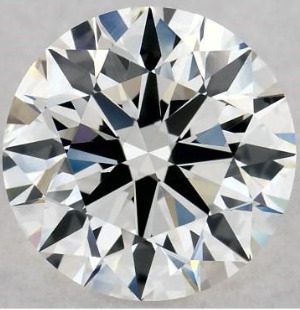
Prioritize cut above everything else. A well-cut lab diamond in G/VS2 will sparkle more than a poorly cut one in D/FL. Aim for “Excellent” or “Ideal” cut grades. This is non-negotiable.
Use 360° video. Don’t buy any diamond — lab or natural — without seeing it rotate in high-definition video. It’s the only way to spot issues (milky patches, visible inclusions, uneven symmetry) that the grading report doesn’t fully capture. James Allen’s viewer is the industry benchmark for this.
SI1 can work, but look carefully. In lab diamonds, you can often get an eye-clean SI1 at a meaningful discount to VS2. The key word is “eye-clean” — meaning no inclusions visible to the naked eye. Always confirm by reviewing the 360° video and, ideally, the inclusion plot on the grading report.
G or H color is the sweet spot. In white gold or platinum settings, G or H delivers a face-up colorless appearance at a fraction of D–F pricing. Save the money. If you’re setting in yellow gold, H or I is fine — the warm metal masks subtle body color naturally.
Who Should Buy a Lab Created Diamond Ring?
The buyer who gets the most from a lab created diamond ring is someone who:
Wants a larger center stone without stretching the budget. A 1.5–2 carat lab diamond engagement ring is within reach for budgets that would buy a 0.7–0.9 carat natural diamond. This is the most common reason buyers choose lab.
Values the proposal and the relationship over the stone’s geological backstory. For this buyer, what matters is wearing a beautiful, real diamond on their finger every day — not where it came from.
Is fashion-forward and treats jewelry as a current purchase rather than a legacy asset. Lab diamonds work exceptionally well for stackable bands, fashion rings, earrings, and pendants where resale is never a consideration.
Is ethically motivated. If conflict-free origin and supply chain transparency matter to you, lab diamonds offer complete certainty on that front.
Where lab diamonds are less ideal: buyers who want to tell a “rare, once-in-a-lifetime” story around the stone, or anyone planning to upgrade or sell within five to ten years and expects to recover meaningful value.

Common Myths About Lab Grown Diamonds
“They don’t last as long.” False. A lab diamond is just as hard as a natural diamond — 10 on the Mohs scale. It will not chip, scratch, or degrade differently. It will outlast the setting that holds it.
“Jewelers can always tell.” Not with standard equipment. A seasoned traditional jeweler examining a lab diamond under a standard 10x loupe will see a diamond. Distinguishing origin requires specialized laboratory-grade equipment that tests for nitrogen distribution and growth structure. It’s not a loupe test, not a thermal test, not a scratch test. The equipment runs $10,000+.
“They cloud over time.” No. Diamonds don’t cloud — lab or natural. What people sometimes describe as “clouding” in any diamond is usually surface contamination from lotions, soaps, and skin oils. That cleans off with warm soapy water and a soft brush. The diamond itself doesn’t change.
“They sparkle less.” Also false. Sparkle (brilliance and fire) in a diamond is a function of cut quality — how precisely the facets are aligned to capture and reflect light. Lab diamonds have the exact same refractive index (2.42) as natural diamonds. A well-cut lab diamond in an ideal or excellent grade will outsparkle a poorly cut natural diamond. Cut quality is the variable; origin is not.
“They’re a new, unproven product.” Lab diamonds have been commercially available for decades — HPHT has been in use since the 1950s. CVD gem-quality production scaled significantly in the 2010s. There’s nothing experimental here.
“You can’t insure them.” You can. Standard jewelry insurance through providers like Jewelers Mutual covers lab grown diamonds exactly the same way as natural ones. You’ll appraise the stone and insure it at replacement value.
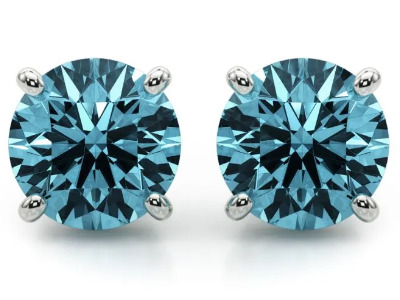
“Lab diamonds have a blue tint.” Some lab diamonds — particularly CVD stones — can show a faint blue or gray nuance in certain lighting conditions, sometimes called “blue nuance.” This is related to trace element content during growth. It’s visible in some stones and not others, and it’s worth checking the 360° video specifically for this if it concerns you. Reputable retailers will disclose it; well-cut stones in normal lighting don’t typically show it noticeably. For a deeper look at this specific topic, TwirlWeddings has a dedicated guide on blue nuance in lab diamonds.
“Lab diamonds aren’t graded the same way.” They are. GIA, IGI, and GCAL grade lab diamonds using the same 4Cs methodology as natural diamonds — cut, color, clarity, and carat weight. The only addition is the origin disclosure on the report. Grading stringency is consistent.
Where to Buy Lab Created Diamonds
Not all retailers handle lab diamonds equally. These three are the strongest options for buyers researching online.
James Allen
James Allen is the best starting point for most buyers. Their platform offers HD 360° video for every stone — which matters especially for lab diamonds, where you want to verify eye-cleanliness and cut quality before buying. Their lab diamond selection is extensive, their pricing is competitive, and their filtering tools let you dial in exact specifications efficiently.
They accept IGI and GIA certifications and offer 30-day returns. Ideal for buyers who want to compare many stones and make a data-informed choice.
👉 Browse lab diamonds at James Allen | Read the full James Allen Review
Blue Nile
Blue Nile has one of the largest lab diamond inventories online and consistently competitive pricing. Their filtering is solid, though their imaging is less detailed than James Allen’s — they show 360° video on most stones but the resolution varies. A good option if you’re price-sensitive and want to see a wide inventory before narrowing down.
They offer 30-day returns and 0% APR financing options. Worth using as a comparison resource even if you ultimately buy elsewhere.
👉 Browse lab diamonds at Blue Nile | Read the Blue Nile Review
Brilliant Earth
Brilliant Earth is the strongest option for buyers who prioritize ethical sourcing and sustainability. Their lab diamonds come with detailed origin documentation and they’ve built their brand around supply chain transparency. Their prices run slightly higher than James Allen or Blue Nile, but for buyers where ethics are the primary motivator, the premium is worth it.
They also have physical showroom locations in major US cities if you want to view stones in person before buying online.
👉 Browse lab diamonds at Brilliant Earth | Read the Brilliant Earth Review
For more on evaluating options, see the Best Place to Buy Diamond Engagement Rings guide and Where to Buy Lab Grown Diamonds Online.
Understanding Lab Diamond Certifications
Lab diamonds should be certified by a reputable grading laboratory. The two most relevant are:
IGI (International Gemological Institute) — the most common certification for lab grown diamonds. IGI grades the majority of lab stones sold at major online retailers. Their grading is generally consistent and their lab reports clearly disclose the growth method (HPHT or CVD). For lab diamonds, IGI certification is the industry standard.
GIA — the gold standard for natural diamond certification, GIA also grades lab grown diamonds. Their lab reports use slightly different grade designations than natural stones, and GIA-certified lab diamonds are less common than IGI. Some buyers prefer GIA for the brand familiarity and perceived strictness.
GCAL — a smaller but respected lab that provides some of the most detailed optical performance reports available. Good choice for buyers who want additional light performance data beyond the standard 4Cs.
Avoid any retailer selling uncertified lab diamonds above $500, or those certified by in-house or unknown grading labs. For more on this topic, see Which Diamond Certification is Best and IGI vs GIA.
How Lab Diamonds Fit Into a Larger Diamond Purchase Decision
If you’re still weighing your options, here are the key comparison reads on TwirlWeddings:
- Lab vs natural in detail: Lab Created vs Natural Diamonds
- Lab diamonds vs moissanite: Moissanite vs Lab Diamonds
- Lab vs cubic zirconia: Cubic Zirconia vs Lab Diamonds
- Price breakdown by carat: 1 Carat Diamond Ring Price | 2 Carat Diamond Ring Price
- How lab diamonds are made: How Are Lab Grown Diamonds Made?
- Lab diamond resale reality: Lab Grown Diamond Resale Value Per Carat
- Pricing overview: Lab Grown Diamond Price

FAQ
What are lab created diamonds?
Lab created diamonds are real diamonds grown in a laboratory using high-pressure high-temperature (HPHT) or chemical vapor deposition (CVD) methods. They are chemically and physically identical to natural diamonds — pure carbon in a cubic crystal structure — and are certified and graded by the same gemological laboratories using the same 4Cs criteria.
What are lab grown diamonds called?
They go by several names: lab grown diamonds, lab created diamonds, man-made diamonds, and cultured diamonds. The terms “lab grown” and “lab created” are most widely used in retail. “Synthetic diamond” is technically accurate but rarely used due to its misleading connotations. All of these names refer to the same thing.
Are lab grown diamonds real?
Yes. A lab grown diamond is a genuine diamond. It has the same carbon crystal structure, the same hardness (10 Mohs), the same refractive index (2.42), and the same optical behavior as a mined diamond. The FTC officially recognizes lab grown diamonds as diamonds.
What are lab created diamonds made of?
Pure carbon, arranged in a cubic crystal lattice — identical to natural diamonds. This is what distinguishes them from simulants like cubic zirconia (zirconium dioxide) or moissanite (silicon carbide), which are different materials entirely.
Are lab created diamonds cheaper?
Yes. Lab diamonds typically cost 70–85% less than natural diamonds of the same grade. A 1-carat natural diamond in G/VS2 might cost $4,500–$8,000. The equivalent lab diamond runs $800–$1,500. The gap is real, significant, and continues to widen.
Do lab diamonds have resale value?
Very little. Resale value for lab diamonds is typically 10–20% of purchase price, if that. The secondary market is thin and declining prices make it difficult to recover value. If resale matters, natural diamonds offer slightly better (though still modest) value retention.
Do lab diamonds turn yellow over time?
No. A properly graded lab diamond won’t change color with age. Some very low-quality stones may show slight color shifts under extreme conditions, but a certified lab diamond in D-J color range will maintain its grade. What sometimes appears as “yellowing” in any diamond is usually surface contamination, not the stone itself.
Can you insure a lab-grown diamond?
Yes. Lab grown diamonds can be insured through standard jewelry insurance providers exactly like natural diamonds. You’ll need an appraisal document, which most retailers provide, and you insure it at replacement value.
Are lab grown diamonds worth buying?
For most buyers, yes. You get a real diamond — identical in appearance and durability — at a fraction of the cost. The primary trade-off is resale value, which is very low. If you’re prioritizing size, quality, or ethical sourcing within a budget, lab grown diamonds deliver exceptional value. If rarity, natural origin, or investment potential matter to you, natural diamonds are a better fit.
Last updated: June 2026. Prices are market estimates and subject to change. Always verify current pricing and policies directly with retailers before purchasing.