

Affiliate disclosure: TwirlWeddings.com earns a commission from qualifying purchases made through links on this page. This never affects our recommendations — our goal is to help you make the smartest buying decision for your budget.
A 3 carat diamond ring typically costs anywhere from $14,000 to well over $150,000, depending on whether the diamond is natural or lab-grown, and how it scores on cut, color, clarity, and certification. For most buyers, a high-quality natural 3 carat engagement ring lands between $35,000 and $70,000. If you’re open to a lab-grown diamond, that same visual impact costs dramatically less — most buyers spend $2,500 to $6,000 for a comparable lab stone in 2026.
That’s a massive range. And that gap is exactly why this guide exists.
The price of a 3 carat diamond isn’t just a number — it’s a reflection of rarity, quality tradeoffs, market forces, and frankly, how much you know before you walk into a store or open a browser. Most buyers overspend. Not because they’re careless, but because they don’t know which quality factors actually matter at this size.

This guide covers:
- Real 2026 price ranges for natural and lab-grown 3 carat rings
- What drives the wild price differences
- How to get the most diamond for your money
- Which quality tradeoffs are invisible vs. worth paying for
- Where to shop and what to look for
Quick Answer: How Much Does a 3 Carat Diamond Ring Cost?
3 Carat Diamond Ring Price at a Glance (2026)
| Diamond Type | Typical Ring Price (Diamond + Setting) |
|---|---|
| Lab-Grown (Good Quality) | $2,500 – $4,500 |
| Lab-Grown (Premium Quality) | $4,500 – $7,500 |
| Natural (Budget — Color/Clarity Compromises) | $14,000 – $30,000 |
| Natural (Good Quality — Sweet Spot) | $35,000 – $70,000 |
| Natural (Premium — D-F, VVS+) | $75,000 – $150,000+ |
| Rare Investment-Grade Natural | $120,000 – $300,000+ |
💎 Gemologist Note: The 3 carat mark is one of the biggest pricing inflection points in the diamond market. Crossing from 2.99 carats to 3.00 carats can add thousands of dollars to the price of an otherwise identical stone — despite a size difference nobody would ever notice on a hand.
One number worth sitting with: lab-grown diamond prices have dropped dramatically since 2022. Production efficiencies have pushed the retail cost of an IGI-certified, excellent-cut 3 carat lab diamond down to roughly $1,500 – $3,500 for the stone alone in 2026. The setting adds $800 to $2,500 on top of that. This isn’t a compromise choice anymore — it’s a legitimate strategy for buyers who want maximum size and visual quality at a fraction of natural diamond pricing.
Why Are 3 Carat Diamonds So Expensive?
The short answer: rarity scales exponentially, not linearly.
A 1 carat diamond is rare. A 2 carat diamond isn’t twice as rare — it’s many times rarer. By the time you reach 3 carats, you’re dealing with rough diamonds that form over billions of years and appear in nature in genuinely limited quantities.
Here’s the practical math: when a diamond cutter shapes a rough stone, they lose roughly 50% of the material to achieve the ideal proportions for brilliance. To produce a finished 3 carat round brilliant diamond, the cutter typically starts with a rough stone of 6 carats or more. Rough diamonds of that size are uncommon at the mine level — and only a fraction of those meet the quality standards for fine jewelry.
How the Rarity Scales
- A 1 carat natural round diamond (G/VS2, Excellent cut): approximately $5,500 – $8,000
- A 2 carat natural round diamond (same quality): approximately $14,000 – $22,000
- A 3 carat natural round diamond (same quality): approximately $35,000 – $60,000
Notice that going from 1 to 2 carats roughly doubles or triples the price. Going from 2 to 3 carats does it again — sometimes more. That’s not a markup strategy. It’s the math of scarcity.
3 Carat Natural Diamond Ring Price
If you’re committed to a natural (mined) diamond, here’s what the market looks like in 2026.
Natural 3 Carat Diamond Price Breakdown
| Quality Tier | Diamond Only | Ring Price (with Setting) |
|---|---|---|
| Budget (SI1-SI2, I-J Color) | $10,500 – $22,000 | $14,000 – $30,000 |
| Mid-Range / Sweet Spot (VS2-SI1, G-H Color) | $28,000 – $55,000 | $35,000 – $70,000 |
| Premium (VVS, D-F Color, Excellent Cut) | $65,000 – $130,000 | $75,000 – $150,000+ |
What most buyers should target: The mid-range tier. A G-H color, VS2-SI1 clarity, Excellent-cut 3 carat diamond is eye-clean to virtually everyone, looks stunning in any setting, and is certified by GIA or AGS. You pay a significant premium above the budget tier for meaningful quality improvements — and you avoid the diminishing returns of VVS and flawless grades.
One common mistake is automatically reaching for D-F colorless diamonds because they sound best. At 3 carats, a G color diamond still faces up white and brilliant. The savings versus a D-F stone? Often $10,000 to $20,000 on a stone this size. That’s real money.
Note on “Mined Diamond” vs. “Natural Diamond”
These terms mean the same thing. Some retailers use “mined” or “earth-grown” — they’re all referring to a diamond formed naturally in the earth over billions of years and extracted through mining. If you’re searching online and see “3 carat mined diamond ring price,” those results are pulling the same inventory as “natural diamond” searches.
3 Carat Lab-Grown Diamond Ring Price
Lab-grown diamond pricing has undergone a structural reset over the past three years. The prices you may have seen quoted in older guides are no longer accurate.
In 2026, a 3 carat IGI-certified lab-grown diamond with Excellent cut, G-H color, and VS2 clarity costs approximately $1,500 – $3,000 for the stone alone. Add a quality white gold or platinum solitaire setting, and most buyers are completing a stunning 3 carat lab ring for $2,500 – $5,000 total.
Lab-Grown vs. Natural: Direct Price Comparison
| Category | Natural (G/VS2/Excellent) | Lab-Grown (G/VS2/Excellent) |
|---|---|---|
| Diamond (stone only) | $28,000 – $55,000 | $1,500 – $3,000 |
| Full Ring (with setting) | $35,000 – $70,000 | $2,500 – $5,500 |
| Resale Value | Moderate (30–50% of purchase) | Very low (minimal secondary market) |
| Visual Difference | None visible to naked eye | None visible to naked eye |
| GIA/IGI Certification | GIA preferred | IGI standard |
The visual quality is identical. Both are real diamonds — chemically, optically, and physically. The difference is origin and, increasingly, the secondary market. Lab-grown diamonds don’t hold resale value well right now, which matters if you ever intend to sell or upgrade. For buyers who aren’t concerned with resale, the value equation strongly favors lab-grown at this carat size.
✓ Buying Tip: If you’re shopping lab-grown, check Clean Origin, Brilliant Earth, Ritani, and James Allen. Ritani and Clean Origin in particular are known for transparent lab pricing with strong selection at the 3 carat range — and because margins are slimmer on lab stones, these platforms often show the most competitive pricing.
What Drives the Price of a 3 Carat Diamond?
Cut Quality: The Most Important Factor
Cut is where the money should go. A poorly cut 3 carat diamond looks dull, flat, and smaller than it actually is. An Excellent or Ideal cut 3 carat diamond looks spectacular — maximizing the light return that makes diamonds worth every dollar.
The recommendation for most readers: never compromise on cut to save money elsewhere. A G color, VS2, Excellent cut diamond will outperform a D color, VVS1, Very Good cut stone in face-up appearance — every time.
Price impact by cut grade at 3 carats (natural, G/VS2):
| Cut Grade | Approximate Price Range |
|---|---|
| Excellent / Ideal | $28,000 – $55,000 |
| Very Good | $22,000 – $40,000 |
| Good | $16,000 – $28,000 |
That “savings” on a Good cut comes at a serious cost to appearance. The sweet spot is always Excellent cut.

Color Grade: Where Smart Buyers Save
At 3 carats, color is more visible than in smaller diamonds — the larger the stone, the easier it is to detect subtle warmth. But “more visible” doesn’t mean D color is required.
| Color Grade | Appearance | Price Premium vs. G |
|---|---|---|
| D – F (Colorless) | Icy white | +$8,000 – $20,000+ |
| G – H (Near Colorless) | Faces up white in most settings | Baseline |
| I – J (Slightly Tinted) | Slight warmth, especially in white gold | −$5,000 – $12,000 |
The sweet spot is G or H color. In a yellow gold or rose gold setting, you can push to I color without issue — warm metal tones mask any hint of yellow in the diamond.

Clarity Grade: Stop Overpaying for What You Can’t See
Most buyers are conditioned to reach for VVS because it sounds premium. The reality: at 3 carats, an SI1 or VS2 diamond is eye-clean if you choose carefully. The inclusion types matter more than the grade letter.
| Clarity Grade | What It Means | Eye-Clean? | Price vs. VS2 |
|---|---|---|---|
| IF / FL | Internally flawless | Yes | +$15,000–40,000 |
| VVS1 / VVS2 | Microscopic inclusions | Yes | +$8,000–20,000 |
| VS1 / VS2 | Minor inclusions | Usually yes | Baseline |
| SI1 | Noticeable under 10x magnification | Often yes | −$6,000–15,000 |
| SI2 | Visible inclusions possible | Sometimes | −$12,000–25,000 |
The eye-clean sweet spot for 3 carat diamonds: VS2, or a hand-selected SI1 reviewed via 360° video. Never buy an SI stone without seeing it. Step-cut shapes like Emerald and Asscher show inclusions more readily than brilliant cuts — stick to VS2 or better for those shapes.
⚠️ Watch Out: Paying for IF or FL clarity on a 3 carat diamond is one of the most expensive mistakes in jewelry buying. The inclusions you’re paying to eliminate are invisible without a loupe. Nobody at a dinner party will ever notice the difference — including you.
3 Carat Diamond Ring Price by Setting
The diamond gets most of the budget attention, but the setting matters — both for appearance and for the final ring price.
| Setting Style | Typical Added Cost | Best For |
|---|---|---|
| Solitaire (4-prong or 6-prong) | $800 – $2,500 | Maximum diamond focus |
| Hidden Halo | $1,500 – $3,500 | Looks larger, stays subtle |
| Pavé Band | $1,800 – $4,000 | Adds sparkle along the shank |
| Full Halo | $2,000 – $5,000 | Maximum visual impact |
| Three-Stone | $2,500 – $6,000+ | Significant extra diamond weight |
For a 3 carat center stone, a solitaire or simple pavé band tends to be the most flattering — the diamond does the work. A halo can make the ring look even more impressive, but with a 3 carat center stone, it’s already going to command attention.
Metal choice also affects pricing. Platinum settings run $300 – $800 more than 14K or 18K white gold equivalents. For daily wear with a significant diamond, platinum’s durability is worth considering.
How Big Does a 3 Carat Diamond Actually Look?
A 3 carat round diamond measures approximately 9.3 – 9.5mm in diameter — roughly the width of a standard pencil eraser. On a size 6 finger, it covers roughly 60–65% of the finger width. The look is unmistakably substantial.
But the shape affects how large a diamond appears face-up, sometimes dramatically.
Approximate Dimensions by Shape (3 Carat)
| Shape | Approximate Dimensions | Face-Up Area vs. Round |
|---|---|---|
| Round | 9.3 – 9.5mm diameter | Baseline |
| Oval | 11.5 × 8.5mm | ~10–15% larger-looking |
| Pear | 14 × 8.5mm | ~15–20% larger-looking |
| Marquise | 16 × 8mm | ~20–25% larger-looking |
| Emerald | 11 × 8mm | Slightly smaller-looking |
| Cushion | 9 × 9mm | Similar to round |
| Asscher | 8.5 × 8.5mm | Slightly smaller-looking |
Shapes That Look Larger Than Their Weight
Oval, pear, and marquise cuts have elongated outlines that maximize the face-up surface area. An oval 3 carat diamond can appear up to 15% larger than a round brilliant of the same weight due to that extra spread. If visual size is a priority, oval is the smartest choice at this carat weight.
Cushion and Asscher cuts tend to carry more weight in depth rather than spread — they don’t look dramatically different from a 2.5 carat stone side by side. Beautiful cuts, but not the choice if maximum visual impact is the goal.

How to Save Thousands on a 3 Carat Diamond Ring
Strategy 1: Buy Just Below Magic Carat Weights
The “3 carat premium” is real and it’s significant. Suppliers and retailers price stones with round numbers in mind. A 2.97 carat diamond is visually indistinguishable from a 3.00 carat diamond — but the price difference can be $3,000 – $8,000 on a natural stone.
Practical targets:
- 2.90 ct — looks identical, saves 8–12% vs. 3.00 ct
- 2.95 ct — almost no visual difference, saves 5–10%
- 2.99 ct — essentially a 3 carat diamond at a 3–6% discount
This is one of the highest-value tips in diamond buying. Use it.
Strategy 2: Choose G-H Color Instead of D-F
The savings on a near-colorless G or H grade diamond versus a colorless D-F at 3 carats can easily reach $10,000 – $20,000. That difference is invisible to the naked eye in most settings and lighting conditions.
Exception: if you’re setting the stone in platinum or white gold and have a particularly trained eye, you may notice the subtlest difference between a D and an H. For the vast majority of people — including jewelers who aren’t actively comparing — it won’t matter.
Strategy 3: Target VS2 Over VVS
Going from VVS2 to VS2 on a 3 carat G-color Excellent-cut round natural diamond typically saves $6,000 – $15,000. A well-chosen VS2 stone is eye-clean. Use the 360° video viewer (James Allen and Brilliant Earth both have excellent viewers) to confirm no visible inclusions before purchasing.
Strategy 4: Consider a Lab-Grown Diamond
If you want a 3 carat diamond and the visual quality of natural, but the $40,000–$60,000 price tag for a well-chosen natural stone isn’t feasible — or isn’t a priority — a lab-grown diamond delivers the same optical performance for a fraction of the cost.
The tradeoff is resale value. Lab-grown diamonds have a very limited secondary market right now. If you’re buying as a sentimental piece with no intention to sell or upgrade, that limitation may not matter to you at all.
A smarter use of your budget for some buyers: spend $4,000–$6,000 on an excellent lab-grown 3 carat ring and invest the remaining $30,000+ elsewhere.


Is a 3 Carat Diamond Ring Worth It?
This depends entirely on what you’re buying it for.
Reasons to Buy a 3 Carat Diamond
The visual impact is real. A 3 carat diamond is genuinely impressive on the hand. This isn’t just a status statement — it’s a beautiful piece of jewelry that commands attention in any light.
Rarity has meaning. For buyers who value what a natural diamond represents — billions of years of geological formation, rarity, permanence — the premium reflects something real.
Long-term wearability. Diamonds score 10 on the Mohs hardness scale. A 3 carat diamond in a quality setting will look the same in 50 years as it does today with basic maintenance.
Reasons to Think Twice
Insurance costs scale with value. A $50,000 ring costs $400 – $800 per year to insure (typically 0.5–1.5% of appraised value). Budget for this before you buy.
Color and clarity flaws are more visible. At 3 carats, a poor cut or below-ideal color grade is more obvious than it would be in a 1 carat diamond. You need to be more selective — which means you shouldn’t be buying blind without 360° video and a GIA certificate.
Daily wear practicality. A 3 carat solitaire is a statement ring, not always a practical one for hands-on jobs or active lifestyles. Consider setting style carefully.
Who Should Buy a 3 Carat Diamond
- Buyers who prioritize presence and visual impact above other factors
- Those purchasing a once-in-a-lifetime piece where sentiment outweighs financial optimization
- High-income buyers where the spend represents a manageable percentage of assets
- Buyers who want a natural, rare stone and understand the value retention dynamics
Who Should Consider a 2.5 Carat Instead
- Budget-conscious buyers who want maximum quality within a capped spend
- Those who prioritize Excellent cut and premium color over raw carat weight
- Anyone who hasn’t compared a 2.5 and 3 carat in person — side by side, the difference is smaller than you expect
A high-quality 2.5 carat natural diamond (G/VS2/Excellent) typically costs $20,000 – $38,000 — roughly $15,000 – $25,000 less than a comparable 3 carat stone. That savings buys a much better setting, upgrading the overall ring substantially.
Common Mistakes Buyers Make With 3 Carat Diamonds
Prioritizing clarity over cut. The single most expensive mistake. Cut determines how a diamond performs in light. Clarity determines whether it has microscopic inclusions. Only one of those is visible to the naked eye — and it’s cut.
Automatically buying D color. At 3 carats, G-H color faces up white and saves significant money. The D color premium exists partly because of psychology, not because most people can detect the difference.
Paying the 3.00 carat premium. If you need exactly 3.00 carats stated on the certificate for personal reasons, go ahead. Otherwise, a 2.95–2.99 carat stone is a smarter buy.
Choosing the wrong setting for a large stone. A delicate pavé setting can overpower a 3 carat center stone visually, making the ring look busy rather than refined. A well-proportioned solitaire or understated halo lets the diamond lead.
Ignoring certification. At 3 carats and price points from $35,000 to $150,000+, only GIA-certified diamonds should be considered for natural stones. For lab-grown, IGI is the standard. In-house grading from retailers is not a substitute.
Not using the 360° video viewer. Paper grades tell you the grade. The video tells you how the diamond actually looks. Always view before buying online — James Allen and Brilliant Earth both offer this.
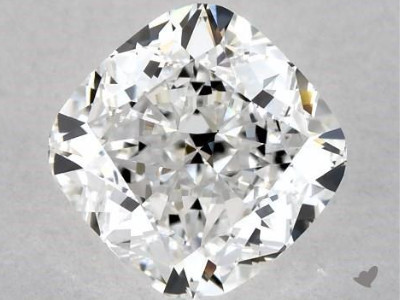
Where to Buy a 3 Carat Diamond Ring
For Natural 3 Carat Diamonds
James Allen is the recommendation for most natural diamond buyers. Their inventory runs into tens of thousands of certified stones, the filtering is excellent (you can sort by specific proportions), and every diamond is viewable in 360° HD video. The ability to visually inspect a VS2 SI1 stone before buying is worth more than you might think at this price point. [Browse James Allen’s 3 carat diamond selection →]
Blue Nile is the other major player for natural diamonds. Pricing is competitive with James Allen on round brilliants, and their diamond selection is deep. The 360° viewer isn’t quite as polished, but the inventory is substantial and pricing is often slightly below James Allen on comparable stones. A solid backup or starting point for comparison. [Browse Blue Nile’s 3 carat diamonds →]
Brilliant Earth is worth considering if ethical sourcing is a priority. Their Beyond Conflict Free sourcing program traces diamonds to specific mines and regions. Pricing runs 10–15% higher than James Allen for equivalent stones, but for buyers where provenance matters, that premium is meaningful. Their designer setting selection is also notably stronger for custom aesthetics. [Browse Brilliant Earth’s collection →]

For Lab-Grown 3 Carat Diamonds
Clean Origin and Ritani are particularly strong for lab-grown stones at the 3 carat range. Both offer transparent, competitive pricing with strong certification standards (IGI). Because lab stone margins are thinner, these platforms tend to price more honestly than some of the larger general retailers.
James Allen also carries a large lab-grown inventory and applies the same 360° viewer to every stone — which matters even for lab diamonds. You still want to see the stone before buying.
✓ Shopping Tip: When filtering for 3 carat lab-grown diamonds on any platform, sort by “Price: Low to High” and filter for IGI-certified, Excellent cut, G-H color, VS2 clarity. You’ll typically find the strongest value in that narrow filter set.
3 Carat Diamond Ring: Final Verdict
For most buyers pursuing a natural diamond, the best value combination at 3 carats is:
- 2.90 – 2.99 carats (avoid the magic weight premium)
- G or H color (near colorless, faces up white)
- VS2 clarity (eye-clean when selected carefully)
- Excellent or Ideal cut (non-negotiable)
- GIA certified (for natural stones)
- Solitaire or simple pavé setting
This approach delivers a spectacular ring in the $30,000 – $55,000 range, depending on exact stone specs and setting choice.
For buyers focused on maximum visual impact on a controlled budget, a lab-grown 3 carat diamond at $2,500 – $5,500 is the clear answer in 2026. The quality is real. The savings are dramatic. The only thing missing is the rarity story.
The right choice depends on what a diamond means to you — not just what it looks like.

Frequently Asked Questions
How much is a 3 carat diamond ring worth?
A 3 carat diamond ring ranges from roughly $2,500 for a high-quality lab-grown to $150,000+ for a premium natural diamond. Most natural 3 carat rings in the quality sweet spot (G/VS2/Excellent) cost between $35,000 and $70,000 including the setting. Lab-grown equivalents cost $2,500 – $6,000.
How much does a 3 carat natural diamond ring cost?
Expect to pay $14,000 – $30,000 for a budget natural 3 carat ring with color or clarity compromises, $35,000 – $70,000 for a well-chosen stone in the quality sweet spot, and $75,000+ for premium grades. All prices include a standard setting.
What is the average 3 carat mined diamond ring price?
“Mined diamond” and “natural diamond” mean the same thing. The average price for a quality 3 carat mined diamond ring (G/VS2/Excellent, GIA certified) is approximately $40,000 – $55,000 in 2026.
Is a 3 carat diamond considered large?
Yes. A 3 carat round diamond is approximately 9.4mm in diameter — noticeably large on most finger sizes. It’s considered a substantial stone by any standard. Less than 1% of engagement ring diamonds sold globally are at or above 3 carats.
How rare is a 3 carat diamond?
Significantly rarer than smaller diamonds. Only a fraction of diamonds mined globally reach 3 carats in polished weight with acceptable quality. The rarity increases non-linearly with size, which is why pricing accelerates so sharply above 2 carats.
Does a 3 carat diamond hold its value?
Natural 3 carat diamonds retain value better than smaller stones and typically hold 30–50% of retail price on the secondary market. They don’t hold value like gold or investment-grade colored stones. Lab-grown 3 carat diamonds have minimal resale value in the current market.
Is a 3 carat lab-grown diamond worth buying?
For buyers who prioritize visual appearance and size over rarity or resale value — absolutely. In 2026, a 3 carat lab-grown diamond delivers the same optical performance as a natural stone for a fraction of the price. It’s one of the strongest value propositions in fine jewelry.
What is the best quality-to-price ratio for a 3 carat diamond?
G-H color, VS2 clarity, Excellent cut at 2.90–2.99 carats offers the best balance of quality and value for natural diamonds. For lab-grown, IGI-certified G/VS2/Excellent at any reputable digital retailer delivers excellent value at today’s prices.
Can you tell the difference between a 2.9 and 3.0 carat diamond?
No. The difference in diameter between a 2.90ct and 3.00ct round diamond is less than 0.1mm — completely imperceptible on the hand or even in photographs. This makes buying just below the 3.00 carat mark one of the simplest and most effective ways to save money on a ring this size.
Where can I buy a high-quality 3 carat diamond ring?
For natural diamonds: James Allen (best selection and viewer tools), Blue Nile (competitive pricing), and Brilliant Earth (ethical sourcing, premium settings). For lab-grown: Clean Origin, Ritani, and James Allen all offer strong selection at transparent prices.
Last updated: June 2026. Diamond prices fluctuate — verify current pricing directly on retailer sites before purchasing.
—