
Affiliate disclosure: TwirlWeddings earns a commission from qualifying purchases made through links on this page. This never affects our recommendations.
A 1 carat diamond ring typically costs anywhere from $1,000 to $15,000+, depending on whether the diamond is lab-grown or natural, and the quality of its cut, color, clarity, and shape. Most buyers spend between $4,500 and $8,500 for a high-quality natural diamond ring, and between $1,000 and $2,500 for a comparable lab-grown ring.
That’s an enormous range — and that’s exactly why this guide exists. If you don’t understand what’s driving the price difference, you’re very likely to either overpay for quality you can’t see, or underpay and end up disappointed with what arrives.
Quick Answer: One Carat Diamond Ring Price Range (2026)
| Ring Type | Typical Price Range |
|---|---|
| Lab-Grown 1 Carat Ring | $1,000 – $2,500 |
| Natural 1 Carat Ring (Value/Mid) | $3,500 – $6,500 |
| Premium Natural 1 Carat Ring | $6,500 – $14,000 |
| 1 Carat Diamond Platinum Ring (Natural) | $4,500 – $15,000 |
| 1 Carat Diamond Platinum Ring (Lab) | $1,500 – $3,500 |
Quick Verdict: For most buyers, a natural 1 carat round diamond with Excellent cut, G–H color, and VS2 clarity is the sweet spot — typically $5,000–$8,000 at top online retailers. If maximizing size or staying under $3,000 is the priority, lab-grown is the smarter play.
👉 Browse current 1 carat diamond prices at James Allen | See lab-grown options at Blue Nile
How Much Is a 1 Carat Diamond Ring, Really?
One thing that surprises most buyers: the diamond itself is almost always the biggest line item. The ring setting — the metal, the prongs, the craftsmanship — is usually a small fraction of the total cost.
Here’s a rough breakdown:
| Component | Typical Share of Total Cost |
|---|---|
| Center diamond | 70–90% |
| Setting (metal + labor) | 10–30% |
| Taxes & shipping | Variable |
This matters because it tells you where the real leverage is. If you want to spend less, the diamond is where to focus — not the setting. A slightly lower color grade or a fancy shape instead of round can save you $1,000–$3,000 on the stone alone.
Why Does the Price of a 1 Carat Diamond Ring Vary So Much?
This is the question that most price guides gloss over. Let’s get specific.
Cut Quality
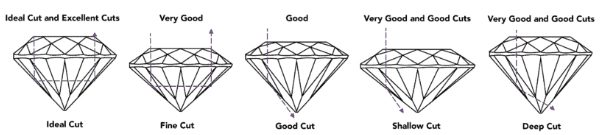
Cut is the single most important quality factor — and it’s the one most buyers underestimate. A well-cut diamond looks bigger, brighter, and more alive than a poorly cut stone of the same carat weight.
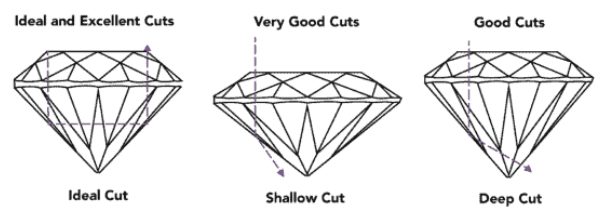
The difference in price between an Excellent cut and a Good cut on an otherwise identical 1 carat stone can be $500–$1,500. That premium is worth every dollar. A dull, lifeless diamond in a beautiful setting is still a dull, lifeless diamond.
The recommendation for most readers: never go below Very Good cut. Excellent is the target. On lab-grown stones — where prices are already lower — there’s no reason to compromise on cut at all.
Color Grade
Diamonds are graded on a D (colorless) to Z (noticeable yellow) scale. The difference between D and G is essentially invisible to the naked eye. The difference in price is very much visible.
- White gold or platinum settings: G–H color is the sweet spot. You get a near-colorless stone at a meaningful discount.
- Yellow or rose gold settings: H–I works well because the warm metal tone masks any subtle warmth in the diamond.
Jumping from H to D on a 1 carat round diamond can add $1,500–$3,000 for a quality difference nobody at your dinner table will ever notice.

Clarity Grade
Clarity refers to the presence of natural inclusions inside the diamond. The GIA scale runs from Flawless (FL) to Included (I3).
For a 1 carat diamond, you don’t need Flawless. You don’t even need VVS1. The target is what’s called an eye-clean stone — meaning no inclusions are visible to the naked eye without magnification.
- VS1 and VS2: Both reliably eye-clean. VS1 commands a premium that usually isn’t justified.
- SI1: Often eye-clean, but requires checking the actual stone — not just trusting the grade. A good 360° video viewer is essential here.
- SI2 and below: Proceed with caution. Some SI2 stones are fine. Many aren’t.
The sweet spot for most buyers: VS2 if you want zero worry, SI1 if you want to save $500–$1,000 and are willing to evaluate the stone carefully.

Diamond Shape
Round brilliant diamonds are the most popular — and the most expensive. They require the most rough diamond to be cut away, which is reflected in the price.
| Shape | Relative Price vs. Round |
|---|---|
| Round | Baseline (most expensive) |
| Oval | 10–20% less |
| Cushion | 15–25% less |
| Emerald | 15–30% less |
| Pear | 15–30% less |
| Radiant | 15–25% less |
💎 Gemologist Tip: Oval diamonds are one of the best value choices at the 1 carat mark. They often appear larger face-up than a round of the same weight, they’re 10–20% cheaper, and they’ve been trending strongly. If your partner is open to shapes, an oval is worth a serious look.
One Carat Diamond Ring Price by Quality
Natural Diamonds
| Quality Tier | Typical Price Range |
|---|---|
| Budget (lower cut/color, or SI1 clarity) | $3,500 – $5,500 |
| Good Value (Excellent cut, G–H, VS2) | $5,500 – $8,500 |
| Premium (Excellent cut, F–G, VS1) | $8,500 – $12,000 |
| Luxury (top grades, designer setting) | $12,000 – $15,000+ |
 Lab-Grown Diamonds
Lab-grown diamond prices have dropped dramatically since 2023. In 2026, even top-quality lab-grown stones are accessible at prices that would have seemed impossible three years ago.
| Quality Tier | Typical Price Range |
|---|---|
| Budget / Direct-to-Consumer | $1,000 – $1,500 |
| Good Value (clean, well-cut) | $1,500 – $2,200 |
| Premium (designer setting, top 4Cs) | $2,200 – $3,500 |
One important note: the dramatic price drop in lab-grown diamonds hasn’t reduced their visual quality. A well-cut lab-grown diamond looks identical to a natural one. What has changed is resale value — which we’ll cover shortly.
1 Carat Diamond Platinum Ring Price
Platinum is the metal of choice for buyers who want the most durable, hypoallergenic, and prestigious setting available. It’s also the most expensive.
Why Platinum Costs More
- Platinum is denser than gold — so more metal goes into each ring
- It’s rarer than gold and more difficult to work with
- Platinum prongs are stronger, which can be an advantage for securing a stone
For a standard solitaire or simple pavé setting, expect to pay roughly $300–$800 more for platinum versus 14K white gold. That premium climbs to $1,000+ only for heavy or intricate custom designs.

Emerald Cut Diamond
Platinum vs. Gold: Cost Comparison
| Setting Metal | Typical Additional Cost vs. 14K White Gold |
|---|---|
| 14K White Gold | Baseline |
| 18K White Gold | +$200 – $500 |
| Platinum | +$300 – $800 (standard designs) |
Typical 1 Carat Diamond Platinum Ring Price
| Diamond Type | Price Range |
|---|---|
| Lab-Grown Diamond + Platinum | $1,500 – $3,500 |
| Natural Diamond + Platinum | $4,500 – $15,000 |
The honest take on platinum: for most buyers, 14K white gold is perfectly durable and looks nearly identical. Platinum makes sense if longevity and metal purity are genuine priorities — not just because it sounds more impressive.
Natural vs. Lab-Grown: The Price Difference Explained
This is where the buying decision gets interesting.
| Feature | Natural Diamond | Lab-Grown Diamond |
|---|---|---|
| Typical 1 carat ring price | $4,500–$14,000 | $1,000–$2,500 |
| Visual appearance | Identical | Identical |
| Chemical composition | Identical | Identical |
| Resale value | Retains ~50–60% | Minimal to none |
| Emotional significance | Natural rarity | Same look, none of the geology |
| Size you can afford at same budget | Smaller | Larger |
The resale value gap deserves a direct comment. In 2026, most jewelers treat lab-grown diamonds as a luxury consumable — like a high-end watch or piece of technology — rather than a store of value. If resale or heirloom potential matters to your partner, that’s a real and legitimate reason to choose natural. If it doesn’t, lab-grown buys you significantly more diamond for your money.
Choose Natural If:
- The natural origin of the stone matters emotionally or symbolically
- Long-term resale value or passing the ring down matters
- You want the rarity argument to be real
Choose Lab-Grown If:
- Maximizing visible size on a set budget is the goal
- You’d rather put the $3,000+ in savings difference toward something else
- Environmental sourcing is a concern
One thing worth noting: the “average engagement ring costs $5,500” statistic that gets cited everywhere is increasingly misleading. Since lab-grown now accounts for 60%+ of the market, many buyers are spending that same $5,500 budget on a 1.5 or 2 carat lab-grown stone rather than a 1 carat natural. What “1 carat” means for the budget depends entirely on which route you take.
Does a 1 Carat Diamond Look Big?
A round 1 carat diamond measures approximately 6.4–6.5mm across when viewed face-up. For context, that’s slightly smaller than a standard pencil eraser (which runs about 6.5–7mm) — though the difference is so small it’s irrelevant in practice.
Whether a 1 carat diamond looks large depends significantly on:
- The person’s hand size. A 1 carat stone reads differently on a size 5 hand versus a size 8.
- The shape. Oval, marquise, and pear shapes have a larger face-up area than round diamonds of the same carat weight, so they appear bigger.
- The setting. A halo setting adds visual diameter around the center stone, making it appear larger without changing the stone size.
For most hands, a 1 carat round diamond reads as a classic, noticeable engagement ring. It’s the most popular engagement ring size for a reason — it hits the sweet spot of visible presence without veering into ostentatious.

Round Cut Diamond
How to Get the Best Value on a One Carat Diamond Ring
A smarter use of your budget isn’t just about spending less — it’s about making sure every dollar goes toward something you can actually see and appreciate.
1. Prioritize Cut Above Everything Else
Cut determines how much light returns to your eye. A well-cut G color diamond will outshine a poorly cut D color diamond in every lighting condition. Never sacrifice cut to reach a higher color or clarity grade within the same budget.
2. Buy Slightly Below the “Magic” Weight Marks
Diamonds are priced in jumps at round-number carat weights — notably at 1.00 ct. A 0.90–0.95 carat diamond looks virtually identical to a 1 carat stone but can cost 10–20% less. This is one of the easiest ways to save several hundred dollars without any visual compromise.
3. Consider Oval or Cushion Shapes
If your partner is open to it, an oval or cushion diamond offers a visibly larger presence than a round brilliant of the same carat weight, at 15–25% less cost. It’s a genuine value move, not a compromise.
4. Don’t Overpay for Clarity You Can’t See
Unless you’re specifically buying for investment or collector purposes, there’s no practical reason to pay for VS1, VVS, or Flawless clarity. A well-chosen VS2 or SI1 eye-clean stone looks identical to a Flawless stone at 10x the price differential.
5. Check the Fluorescence
This tip rarely makes it into mainstream buying guides. Some natural diamonds exhibit fluorescence — a glow under UV light — which is typically graded as None, Faint, Medium, Strong, or Very Strong. Strong blue fluorescence on a D–F color stone can actually reduce price by 5–15% because some buyers avoid it. In most lighting conditions, strong fluorescence is a neutral or even positive quality. It’s a legitimate way to get a near-colorless stone at a discount.
6. Compare Multiple Retailers
The same stone specification can vary in price by $500–$1,500 between retailers. The two platforms that consistently offer the best prices with the most transparent stone presentation are James Allen and Blue Nile — both offer 360° HD video for individual stones, which is the only way to properly evaluate an online diamond purchase.
Where to Buy a 1 Carat Diamond Ring
Best for Natural Diamonds
James Allen — The best 360° viewer in the industry. You can examine every angle of every stone before buying. Their natural diamond inventory is enormous, pricing is competitive, and the search filters are excellent. If you’re buying a natural stone online, this is where to start.
Blue Nile — Slightly larger inventory in some categories, comparable pricing. Their interface is slightly less visually rich than James Allen’s but still best-in-class. Worth checking both to compare on identical specs.

👉 Browse 1 carat natural diamonds at James Allen | See Blue Nile’s selection
Best for Lab-Grown Diamonds
James Allen — Also excellent for lab-grown. Their lab inventory is deep and the 360° viewer is just as valuable for evaluating lab stones.
Brilliant Earth — A strong option if ethical sourcing transparency is a priority. Their pricing runs slightly higher than James Allen on equivalent stones, but the sourcing documentation is the most rigorous in the industry.
Best for Platinum Settings
Both James Allen and Blue Nile carry a wide range of platinum solitaire and pavé settings. If you’re going platinum, make sure to verify the gram weight of the setting — heavier settings hold up better over decades of daily wear.
Common Mistakes That Increase the Cost (Without Increasing What You See)
Paying for Invisible Clarity
Moving from VS2 to VVS1 on a 1 carat round diamond can add $1,000–$2,500 to the price. To the naked eye — and even to most jewelers in normal lighting — the difference is invisible.
Ignoring Cut Quality
One common mistake: buyers who obsess over color and clarity but accept a Good or Very Good cut grade. A poorly cut D/IF diamond looks worse than a well-cut G/VS2. Cut should be locked in first.
Buying Based Only on Carat Weight
Carat is weight, not size. Two 1 carat diamonds from different vendors can look dramatically different face-up based on their depth percentage and table size. Always check actual millimeter measurements.
Choosing Platinum Without Understanding the Premium
Platinum is an excellent metal — but if you’re choosing it purely because it sounds more prestigious, 14K white gold does the same visual job for $300–$800 less. That savings can go toward a better stone.
Shopping a Single Retailer
The diamond market has enough price variation that comparing two or three vendors on identical specifications almost always saves money. James Allen and Blue Nile are worth checking side by side on any purchase over $3,000.
Is a 1 Carat Diamond Ring Worth It?
Short answer: yes — if you buy it right.
The 1 carat diamond ring remains the most popular engagement ring size in the US for good reason. It’s large enough to make an impression, small enough to avoid looking flashy, and available at price points that work for a wide range of budgets.
Pros
- The most widely available size — huge selection across all shapes and qualities
- Strong balance of visual presence and price
- Universally understood as a “real” engagement ring size
- Easy to resize, insure, and resell if needed (natural diamonds)
Cons
- The price jump between 0.95 ct and 1.00 ct is real — you’re paying a premium for the round number
- Round brilliant 1 ct diamonds carry a shape premium that fancy shapes don’t
- Lab-grown resale value is essentially zero — buyers who might need to sell should factor this in
Final Verdict
| Buyer Profile | Best Choice |
|---|---|
| Best budget choice | Lab-grown 1 carat, Excellent cut, G–H, VS2 (~$1,500–$2,200) |
| Best overall value | Natural 1 carat, Excellent cut, G–H, VS2 at James Allen or Blue Nile |
| Best visual impact for budget | Lab-grown oval or cushion, 1.2–1.5 ct for the price of a 1 ct natural round |
| Best long-term/heirloom | Natural round, Excellent cut, F–G, VS1–VS2, platinum setting |
The recommendation for most readers: a natural 1 carat round diamond with Excellent cut, G–H color, and VS2 clarity typically costs $5,000–$8,000 at a reputable online retailer and delivers the best combination of beauty, resale value, and emotional weight. Buyers focused on maximizing visible size should seriously consider a lab-grown oval or cushion — you can often get a 1.3–1.5 carat stone for the same budget as a 1 carat natural round, with zero visual compromise.

👉 Browse 1 carat diamonds at James Allen | Compare prices at Blue Nile | See Brilliant Earth’s lab-grown selection
Frequently Asked Questions
How much should a 1 carat diamond ring cost?
For a high-quality natural 1 carat diamond ring with Excellent cut, G–H color, and VS2 clarity, expect to pay $5,000–$8,500 at a reputable online retailer. A comparable lab-grown ring runs $1,500–$2,500. Budget options exist below these ranges, but cut quality starts to suffer — which is the one factor that affects how beautiful the ring looks in real life.
What is the average one carat diamond ring price?
The commonly cited “average engagement ring” figure of around $5,500 is increasingly distorted by the lab-grown shift. A better benchmark: a well-specified natural 1 carat ring costs around $6,000–$7,000 at mainstream online retailers. Lab-grown equivalents now average closer to $1,800–$2,200.
How much is a 1 carat diamond platinum ring?
Add roughly $300–$800 to the diamond price for a platinum setting in a standard solitaire or pavé design. A natural 1 carat diamond platinum ring typically runs $4,500–$15,000 depending on stone quality. Lab-grown plus platinum typically lands at $1,500–$3,500.
Is a 1 carat diamond considered large?
On most hand sizes, yes — a 1 carat round diamond reads as a classic, substantial engagement ring. It measures approximately 6.4–6.5mm across. Oval, pear, and marquise shapes appear larger face-up than a round of the same carat weight, so they’re worth considering if “looking big” is a priority.
Can you get a good 1 carat diamond ring for under $5,000?
Yes — with lab-grown, easily. A high-quality lab-grown 1 carat ring with Excellent cut, G color, and VS2 clarity typically runs $1,500–$2,200. For natural diamonds under $5,000, you’ll need to make some trade-offs: a fancy shape instead of round, or an I color instead of G, or SI1 clarity with careful eye-clean verification. It’s doable, but requires more careful stone selection.
Is a lab-grown 1 carat diamond worth buying?
For most buyers, yes. Lab-grown diamonds are chemically and visually identical to natural diamonds. The trade-off is resale value — lab-grown stones have essentially no resale market in 2026. If the ring is a keepsake rather than an investment, that trade-off is easy to make. The budget savings are significant.
Which diamond shape offers the best value at 1 carat?
Oval is the strongest value play. It typically costs 10–20% less than a round brilliant, appears slightly larger face-up due to its elongated shape, and has been one of the most popular engagement ring shapes for several years. Cushion and pear are also strong value shapes at 15–25% less than round.
How much bigger does a 1.5 carat diamond look compared to 1 carat?
A round 1.5 carat diamond measures roughly 7.4mm across — about 14% wider than a 1 carat round at 6.4mm. The price difference, however, is not linear. A 1.5 carat natural stone costs roughly 50–80% more than a 1 carat of identical quality grades. With lab-grown, the premium is smaller — but the visual difference between 1 ct and 1.5 ct is real and noticeable.
Last updated: June 2026. All pricing verified against current retailer inventory. Diamond prices fluctuate — check current listings before purchasing.